Seasons, Performance
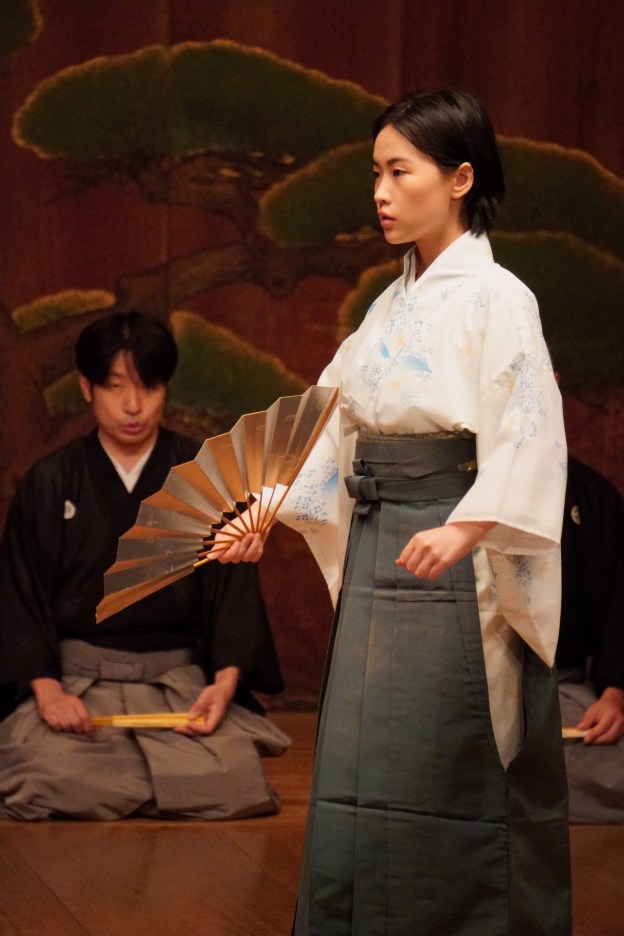
One of the shimai we learned was Yuki. At the beginning of the shimai, Tatsushige-sensei asked us to imagine our bodies buried under thick, heavy snow. Within this restriction and slowness, we were to feel the silence of winter. Our footsteps should be soft and soundless, as if stepping into freshly fallen snow.
As the dance unfolds, the snow gradually falls away from our bodies.
This imagination of the seasons as something physically felt also enters the chanting. Tatsushige-sensei asked us to let the voice sink lower, with the energy becoming smaller, tighter, and more contained. He also demonstrated how chanting can feel different according to the season of a piece. In spring and summer, the voice may rise higher and become more expansive. It is a way of giving physical form to the energy and atmosphere of the environment.
This attention to nature and the seasons seemed to run throughout the training. We went together to see Takigi Noh at Shiramine Shrine, where the Noh play Matsuyama Tengu (Norishige-sensei played one of the tengu) and the firelight echoed the atmosphere of early autumn. Tatsushige-sensei casually mentioned that apparently the full moon would fall on the 27th, the same day as the commemorative performance. Renata and Vincent bought seasonal sweets for sensei as a gift.
I realized that in some ways, nature extends a performer’s practice beyond the rehearsal room and the stage and into everyday life: how we pay attention to the changing seasons, how we enjoy seasonal food, how we experience the moon, the rain, and the temperature.
Perhaps this comes naturally in Kyoto, a city where seasonal customs remain so present in everyday life. But for me, as a performer traveling constantly in modern cities, I forgot when was the last time I thought about the seasons. During the training, through Shōjō and Yuki, we were imagining the arrival of late autumn and winter and being reminded that we are part of it.
Siming Lu
Photograph: Udaka Sanami

