Thoughts on the 2026 INI Kyoto Intensive #4 (Philip Noyed)

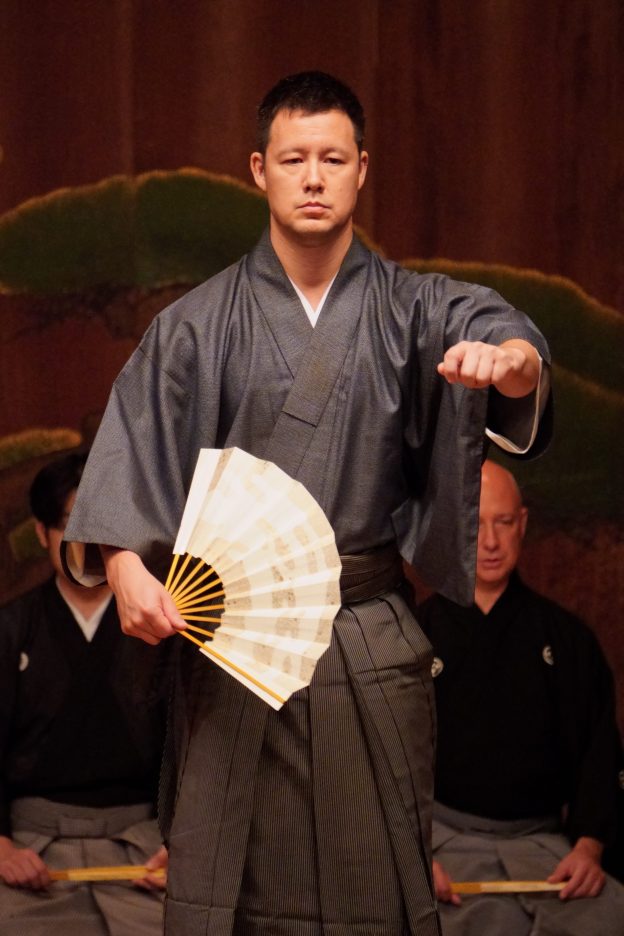
More than forty years ago, I studied Noh theater in Japan as an apprentice of the Hōshō school, eventually becoming the first foreigner to perform at the National Noh Theater in Tokyo. Returning to Japan to study Noh after four decades was both a homecoming and a new beginning.

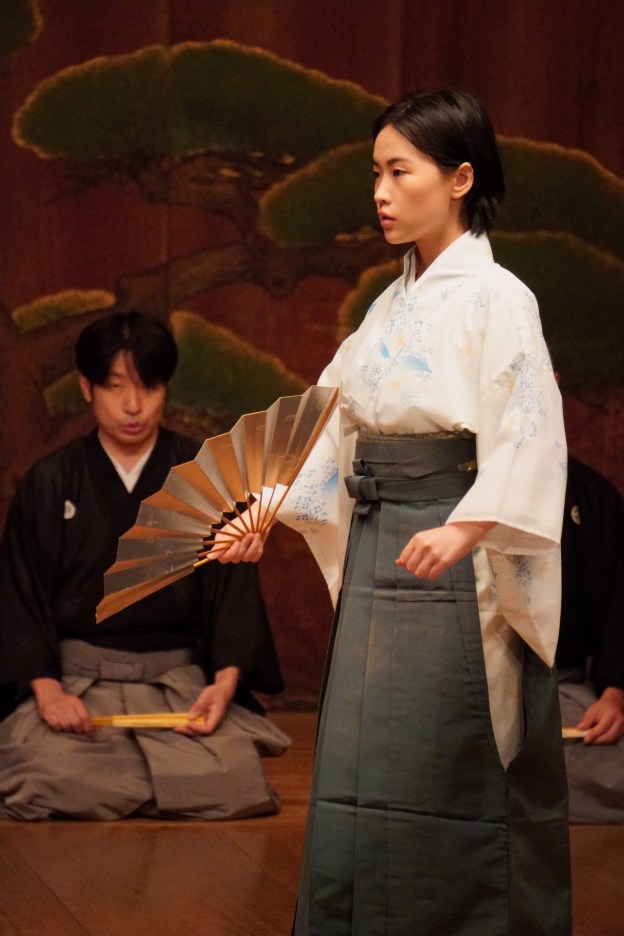
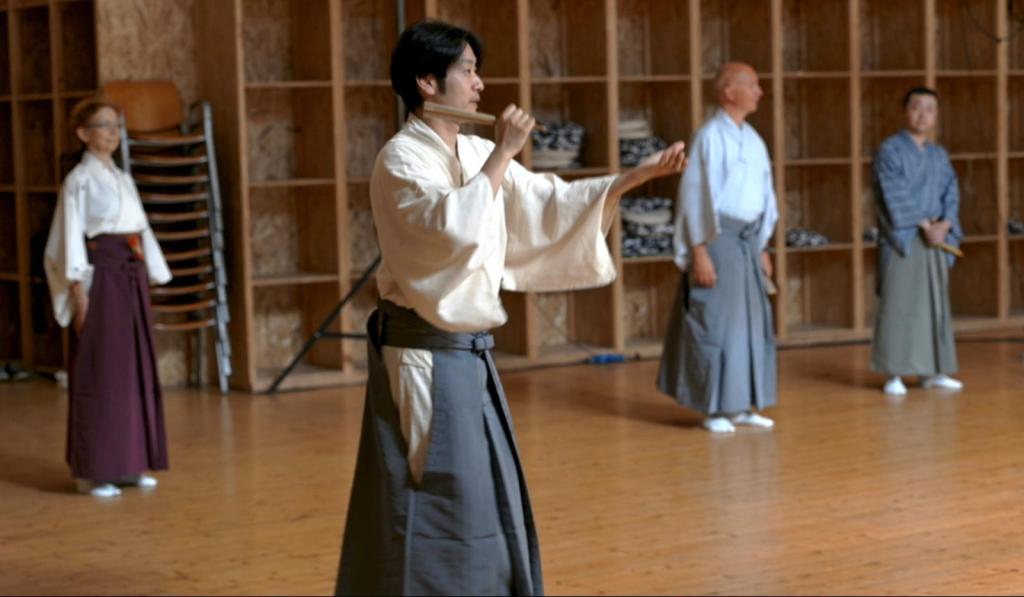
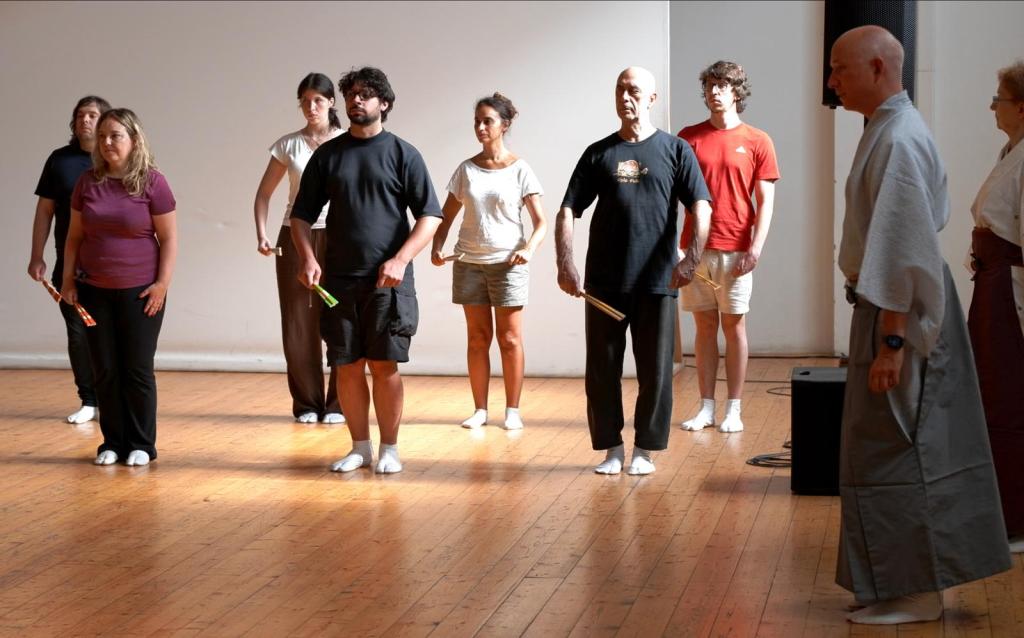
Over two weeks, we immersed ourselves in shimai dance and utai chanting. Learning three dances in such a short period was exhilarating, humbling, and challenging. Every movement, gesture, and moment of stillness demanded concentration and precision while bringing the seasonal imagery of the poetry and the emotions of the characters to life.

I was particularly impressed by the instructors’ ability to make the poetry of utai, the movements of shimai, and the artistry of Noh mask carving accessible to non-Japanese speakers. Their teaching seamlessly combined practical instruction with deeper insights into the philosophy and aesthetics of Noh.

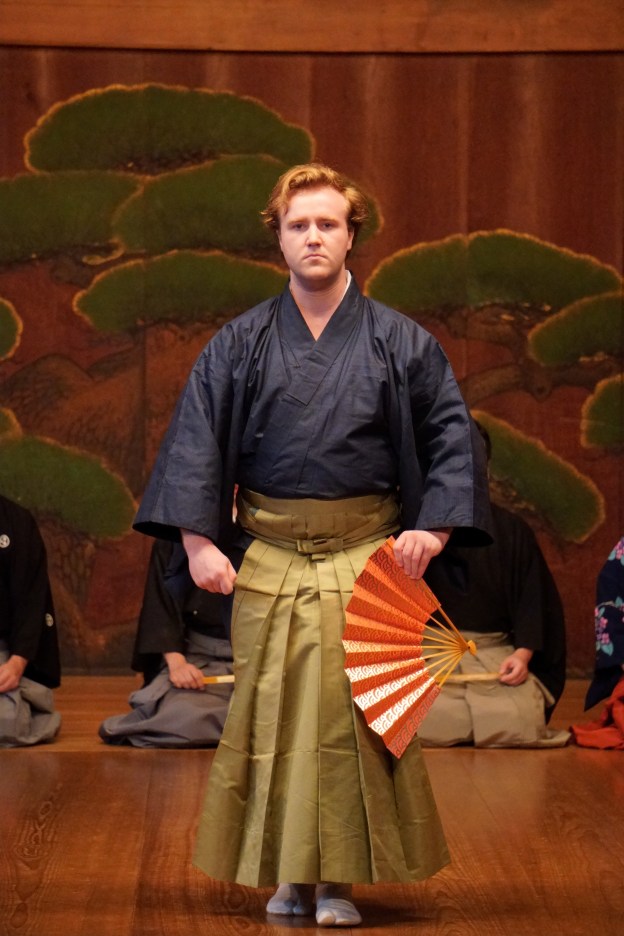
The greatest challenge came while preparing Shōjō for our final recital. The teachers helped me refine my footwork, fan movements, timing, and subtlety of expression. I spent countless hours on my own practicing, listening, watching, and repeating until the movements became second nature. Their patient, precise instruction challenged me to move beyond mastering the choreography toward embodying the spirit of the dance.

I was reminded of Shu-Ha-Ri, the Japanese progression from learning the forms to internalizing and ultimately transcending them. I came to understand that this process is not simply a linear progression toward mastery, but an expanding spiral of learning, refinement, and discovery.

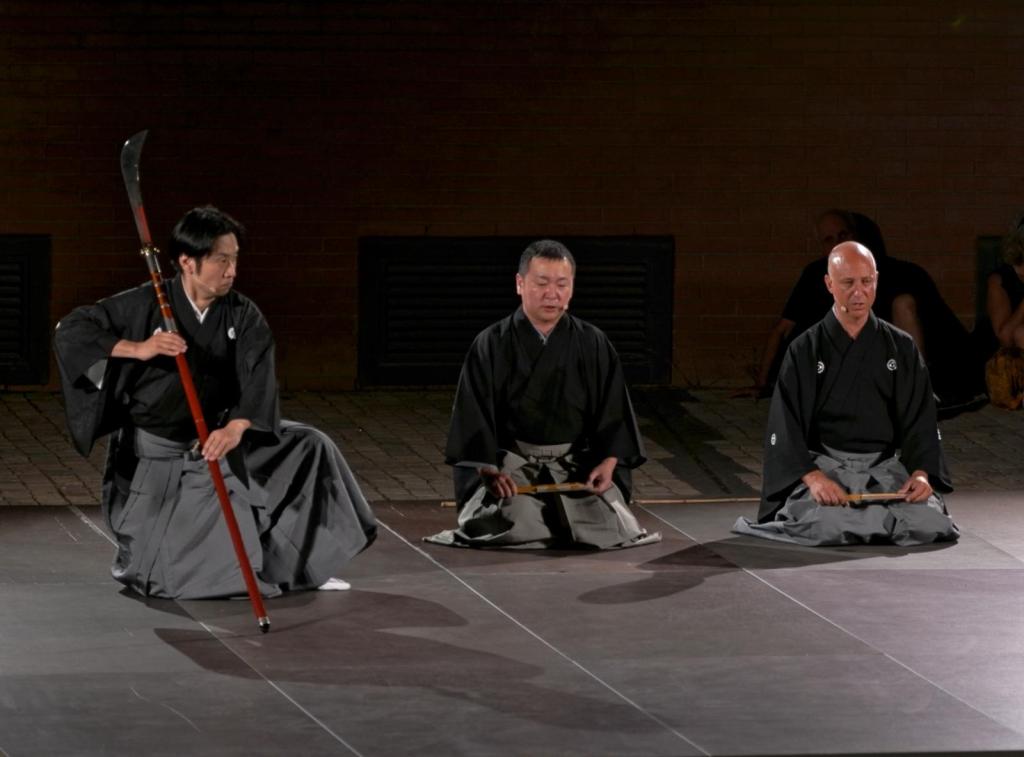
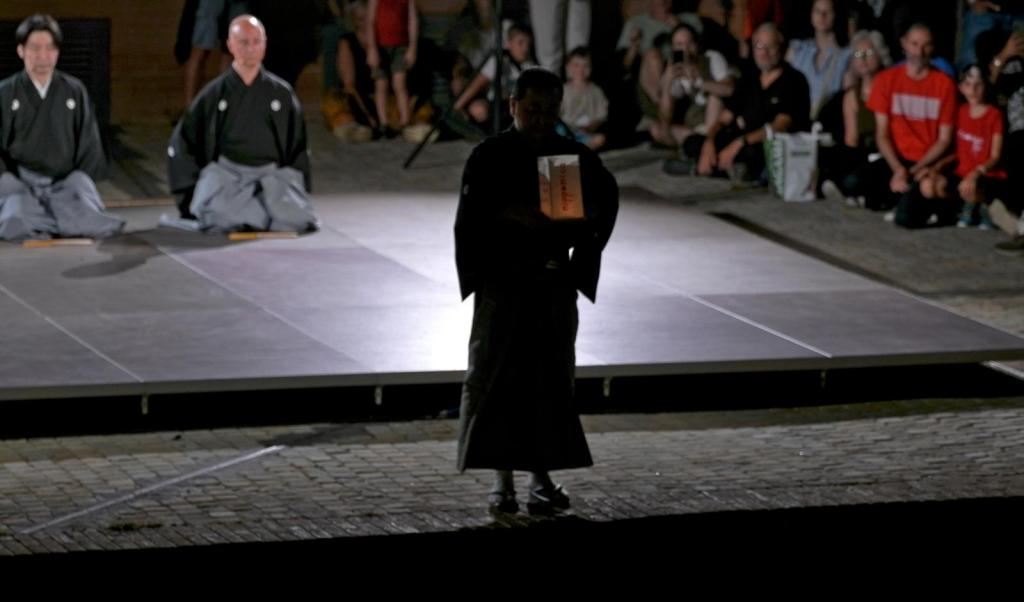
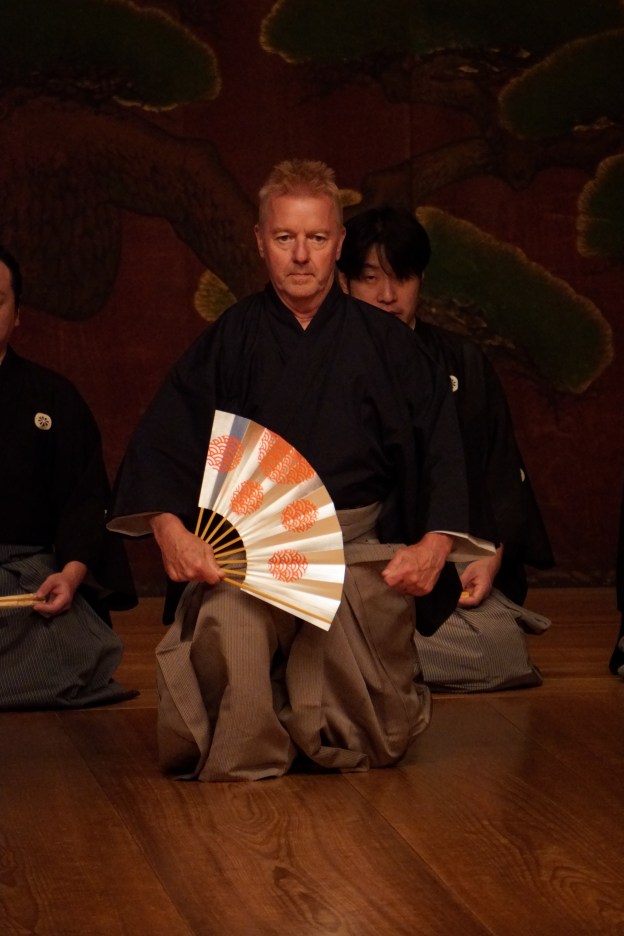
Performing Shōjō at the Kongō Noh Theater was deeply rewarding. All the INI students participated in the Keiunkai Grand Recital, performing utai together and individual shimai dances. Performing on stage to the chanting of the senseis was a profound and magical experience I will never forget.

What stays with me most is the generosity and dedication of Udaka Tatsushige Sensei, Udaka Norishige Sensei, and Diego Pellecchia Sensei, whose thoughtful instruction, encouragement, and attention to detail helped each of us grow as performers. Udaka Keiko’s insights into the meaning, expression, and craftsmanship of Noh masks were equally memorable. Seeing the mask she had been carving during our intensive come alive on stage in a Noh performance was extraordinary.

The INI Intensive was more than a return to Noh. It was a profound reminder that artistic growth is a lifelong adventure, and that even after forty years, there are new ways for the flower of artistic expression to blossom.

Philip Noyed

Photo: Udaka Sanami
Thoughts on the 2026 INI Kyoto Intensive #3 (Antonio Laranjeira)

Where to begin? I keep wondering…

This year, as summer turned to autumn in Kyoto, I was fortunate enough to take part in the International Noh Institute’s Intensive Programme.

When I applied, I was not sure I would be accepted. I was neither a performer nor a Noh scholar—just someone who loved Japanese history and Noh theatre. But I am happy to say that perhaps the most important requirements for joining the course are a love of Noh and a desire to learn.

Reading the reflections of past participants now, I recognize so many of their feelings about the course. It is a testament to how meaningful a learning and life experience it has remained over the years. The depth of knowledge shared, and the quality of the teaching, were astounding. What stood out most was the generosity with which our teachers shared Noh principles, kata, and even less commonly taught techniques and artistic choices. I am still reflecting on our discussions about them.

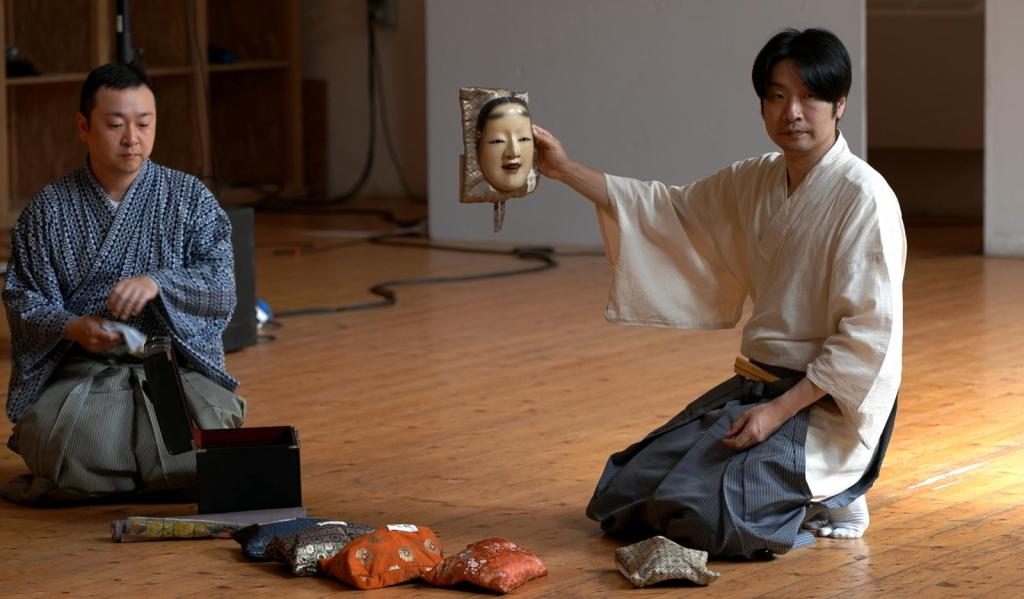
The INI team is truly inspiring, dedicated, and kind. I cannot thank our main teacher, Udaka Tatsushige-sensei, enough, nor Udaka Norishige-sensei, Diego Pellecchia-sensei, and Monique Arnaud-sensei. Each is remarkable in their own way as a Noh practitioner or scholar. I would also like to thank Udaka Keiko-sensei for giving up an evening to show us firsthand how Noh masks are made. We could even smell the history—some 250 years of it—in the freshly carved hinoki (cypress) wood shavings.

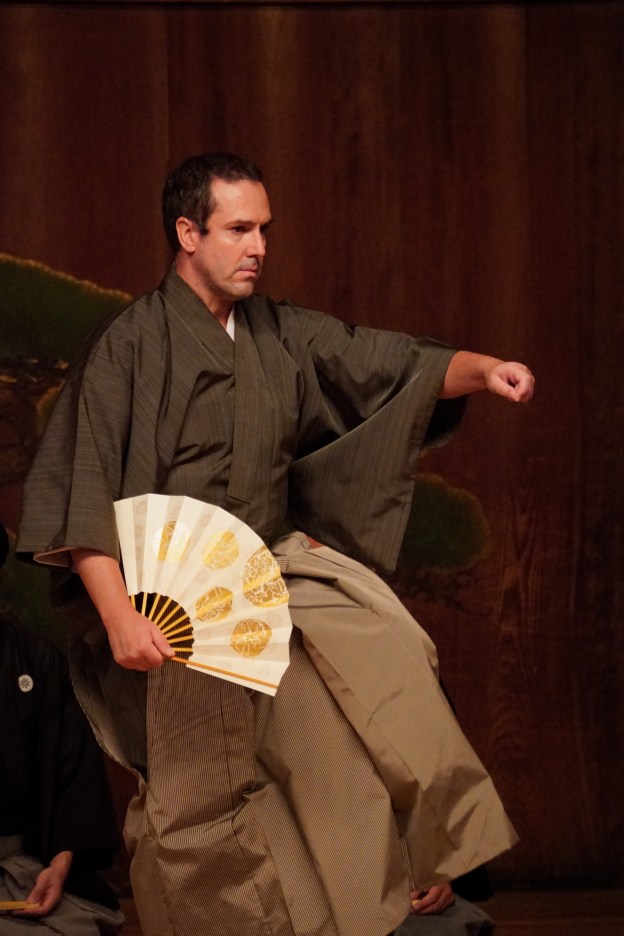
After weeks of intensive training, we had the incredible opportunity to perform on the Kongō Nōgakudō stage.

Sharing the stage and theatre with our teachers, fellow participants, and the students of Tatsushige-sensei and Norishige-sensei was truly special. I would like to offer a particular word of thanks to the kind and funny Sōmyō Tadasuke-sensei, who helped me dress. As I watched everyone, I tried to observe their faces and movements, their relationship to the space on and off the stage, their timing and their pauses. I came to sense a profound ma in all of them. Performance day was amazing!

For a little while, I felt as though I was part of the “Mai-Kongō.”

For me, the highlight of the course was watching Tatsushige-sensei perform Yamanba on the final day, bringing the Noh mask, the costume, the world of the play—and Yamanba herself—to life.

I once read that in Western theatre, something happens, but in Noh theatre, something appears. I am truly glad I was there to see it.

Antonio Laranjeira

Photo: Udaka Sanami

Thoughts on the 2026 INI Kyoto Intensive #2 (Siming Lu)

Seasons, Performance

One of the shimai we learned was Yuki. At the beginning of the shimai, Tatsushige-sensei asked us to imagine our bodies buried under thick, heavy snow. Within this restriction and slowness, we were to feel the silence of winter. Our footsteps should be soft and soundless, as if stepping into freshly fallen snow.

As the dance unfolds, the snow gradually falls away from our bodies.

This imagination of the seasons as something physically felt also enters the chanting. Tatsushige-sensei asked us to let the voice sink lower, with the energy becoming smaller, tighter, and more contained. He also demonstrated how chanting can feel different according to the season of a piece. In spring and summer, the voice may rise higher and become more expansive. It is a way of giving physical form to the energy and atmosphere of the environment.

This attention to nature and the seasons seemed to run throughout the training. We went together to see Takigi Noh at Shiramine Shrine, where the Noh play Matsuyama Tengu (Norishige-sensei played one of the tengu) and the firelight echoed the atmosphere of early autumn. Tatsushige-sensei casually mentioned that apparently the full moon would fall on the 27th, the same day as the commemorative performance. Renata and Vincent bought seasonal sweets for sensei as a gift.

I realized that in some ways, nature extends a performer’s practice beyond the rehearsal room and the stage and into everyday life: how we pay attention to the changing seasons, how we enjoy seasonal food, how we experience the moon, the rain, and the temperature.

Perhaps this comes naturally in Kyoto, a city where seasonal customs remain so present in everyday life. But for me, as a performer traveling constantly in modern cities, I forgot when was the last time I thought about the seasons. During the training, through Shōjō and Yuki, we were imagining the arrival of late autumn and winter and being reminded that we are part of it.

Siming Lu

Photograph: Udaka Sanami

Thoughts on the 2026 INI Kyoto Intensive #1 (Vincent Yūsui van Gerven Oei)

My first encounter with nō was probably through Akira Kurosawa’s movie Kagemusha, which I must have seen for the first time in my late teens or early twenties. Toward the end of the movie, Ryū Daisuke, who plays Oda Nobunaga, dances a part of the nō play Atsumori. This made an enormous impression on me. Later, when I was visiting Tokyo in 2008 during an art residency, I was able to see nō for the first time in person. Eventually I started formal training in Fuke Myōan shakuhachi, and later found a teacher willing to introduce me to the fue, the transverse flute played in the nō musical ensemble, the hayashi. Thus the desire slowly grew to understand more about the broader context of nō dancing and chanting, which the fue supports. And so I arrived at the International Noh Institute in Kyoto in its 40th anniversary year.

The experience was an overwhelming one. Initially, the proposed schedule seemed reasonable: 3 hours of teaching per day, with ample time for self-study and other activities. But the reality quickly dawned on me and the other participants of the 2026 cohort that learning three shimai within the period of two weeks with the aim of performing one of them live on a real nō stage at the end was a tall order. Our teachers Udaka Tatsushige, Udaka Norishige, and Diego Pellecchia, however, were incredibly generous with sharing their time, experience, and wisdom. And nō, so I learned in this period, is incredibly accommodating to beginners and amateurs, despite what appears to be a somewhat forbidding formal facade. All in all this made my experience at INI incredibly nourishing and rewarding and something that I will carry forward in my own engagement with Japanese traditional performing arts.

Vincent Yūsui van Gerven Oei

Photograph: Udaka Sanami

[Closed] Call for participants – INI Kyoto Intensive Program 2026

The International Noh Institute (INI) announces its 2026 Intensive Program, to be held from September 14 to 27, 2026. Applications open on May 15 and close on June 15.

The 2026 edition of the program celebrates the 40th anniversary of the founding of the International Noh Institute and commemorates the seventh anniversary of the passing of its founder, Udaka Michishige. Participants will perform in the final recital at the Kongō Nō Theatre on September 26. They will also have the rare opportunity to observe rehearsals for the Seiran nō performance, as well as attend the performance itself on September 27, featuring Udaka Tatsushige in the play Yamanba.

Who can apply?

Anyone interested in studying nō chant and/or dance. There is no age limit, and previous knowledge is not required. The course is taught by English-speaking Japanese instructors.

What will participants learn?

Participants will study nō dance and chant according to the Kongō school tradition, and learn about various aspects of nō performance, including masks and costumes. The training period will culminate in a public recital on September 26, where participants will perform supported by professional actors at the Kongō Nō Theatre (details of the performance will be published later).

How does training work?

Nō chant and dance classes take place daily, in the morning, or in the early afternoon. Participants will be coached by one of our instructors, but will also be encouraged to practice independently in preparation for the following class. Students learn a shimai (a short excerpt from a longer nō play) which they perform in the final recital, to the accompaniment of a chorus of professionals. In addition, one afternoon will be dedicated to a noh mask carving lecture and demonstration. A day-to-day calendar will be announced after the selection is complete.

See thoughts on the course by previous participants here.

What makes studying with the INI unique?

The intimate environment in which lessons take place, reflecting the traditional nō training style allows students to interact directly with the teachers. Lessons comprise both group work and one-to-one coaching.


Program highlights

  • Train intensively in a small group for an immersive experience.
  • Perform supported by professional actors.
  • Attend the rehearsal of a professional nō performance.
  • Discover the art of nō mask carving.
  • Attend the Seiran Nō performance.
  • Watch nō performances on traditional stages.
  • Visit nō-related historical locations.
  • Experience living in the ancient capital, Kyoto.

Program details

Training period: September 14–27, 2026
Recital: September 26, 2026
Capacity: 6 participants

Instructors: Udaka Tatsushige, Udaka Norishige (Kongō school actors), Udaka Keiko (nō mask carver) Coordinator: Diego Pellecchia (Kyoto Sangyo University)

Fees

Regular ¥100,000, Student (includes graduate students) ¥70,000

Fees include: Dance/chant lessons, materials, Kongō school nō fan, participation in the final recital, and a certificate of completion, attendance of the Seiran Nō performance, and other materials. Fees do not include white tabi (split-toe socks), transportation, accommodation, the participation fee for the final dinner, or any other personal expenses.

Payments should be paid before the start of the course via bank transfer. Further information regarding payment will accompany the notification of acceptance.

How to apply

Send an email to ini.kyoto[at]gmail.com attaching the following two documents:

  • Your Curriculum Vitae (including nationality, country of residence, age, and current profession or school affiliation at the time of application)
  • A statement of interest (around 300 words)

Application calendar

  • Applications open: May 15, 2026
  • Applications close: June 15, 2026
  • Applications are reviewed on a rolling basis, and early application is strongly encouraged.

For more information about the program contact us.

Nipponica 2025: Three Days of Nō in Bologna

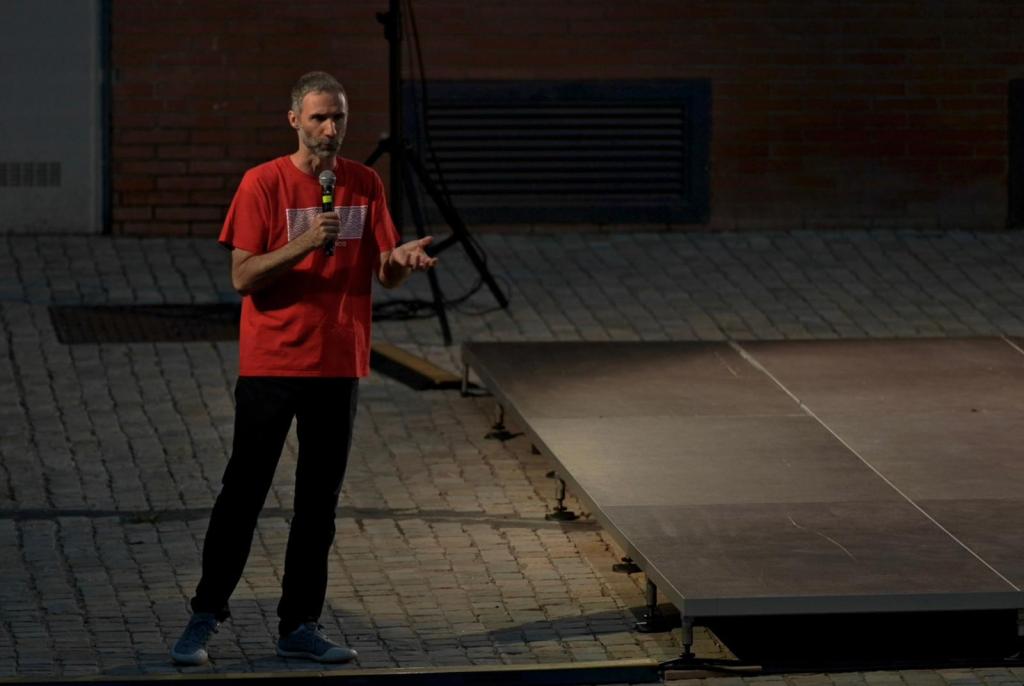
More than 3,500 people gathered in Bologna for this year’s Il Sole di Hiroshima, an event held on August 6 in remembrance of the victims of the atomic bombings of Hiroshima and Nagasaki, as well as all wars. The event was produced by Nipponica, and organized by Dr. Matteo Casari of the University of Bologna. This evening is celebrated every year and culminates with the moving tōrōnagashi ceremony, during which a sea of floating lanterns illuminates the canal crossing the Giardino del Cavaticcio, each serving as a personal tribute to peace.

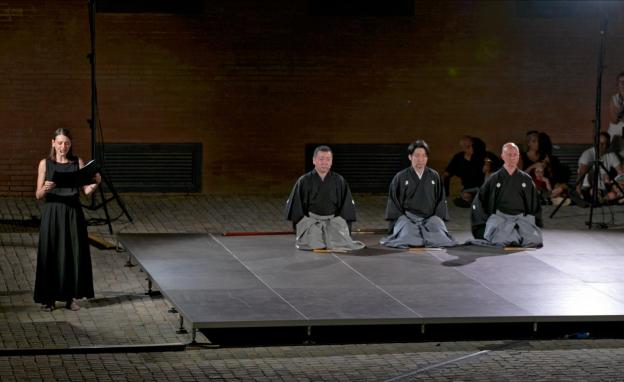
This year the event included four shimai dances from the classical nō repertory. Udaka Tatsushige, Udaka Norishige, and Diego Pellecchia performed selections from Tenko, Fujito, Funa Benkei, and Hagoromo. Each dance was introduced by a dramatic reading of its text by actor Donatella Allegro, adding a rich narrative layer to the performance.

One of the recurring themes in nō drama is remembrance. Many of the protagonists are ghosts or spirits of individuals marked by traumatic experiences, tormented by jealousy, remorse, or the anguish of oblivion. It is through the telling of their stories that they can finally find peace. Other dramas, however, stage the union between gods and human beings as an expression of the desire for peace and harmony. Although deeply rooted in the cultural context in which it was created and developed, the universal themes of nō and its stylized language allow diverse audiences to connect with the stories represented. Like all masterpieces of theatre, these dramas not only have the ability to fix specific events in memory, but they also act as parables that make us reflect on the cyclical nature of the human experience. Thus, nō seemed to fit perfectly the theme and purpose of the event.

The event was provided to the city at no cost. All donations collected were fully dedicated to supporting AGEOP Ricerca and its vital work with young oncology patients and their families.

Following the event, a two-day workshop took place at the DAS Dispositivo Arti Sperimentali where participants learned the fundamentals of nō chant and dance. The workshop saw strong attendance from a diverse and engaged group of participants.

Our deepest thanks go to Nipponica for their impeccable organization and to Matteo Casari for his essential support. This important initiative was made possible through their dedication and passion.

Noh dance performance and workshop in Italy, August 6-8 2025

We are thrilled to announce a nō dance performance and 2-day workshop in Bologna, Italy, on August 6-8, 2025. The event is organized by Nipponica in collaboration with the International Noh Institute.

Performance

The performance is part of the event Il Sole di Hiroshima, an evening of remembrance, peace, and solidarity inspired by the Hiroshima tōrōnagashi lantern ceremony, organized by the Nipponica festival. Held on August 6 at the Giardino del Cavaticcio in Bologna, the event includes lantern floating, Japanese food, cultural activities for children, and a special performance of nō dance by the Udaka family (Kongō school).

This year’s edition supports AGEOP, a local charity assisting children with cancer. Donations for the lanterns will help fund medical care and free accommodation for families in treatment. Entrance is free.

More info here

Workshop

Nipponica will also host an exceptional intensive workshop dedicated to the art of nō theatre—one of the oldest and most refined forms of Japanese stage tradition, where chant, dance, music, and spirituality merge into a performance of profound resonance. Characterized by the essential quality of its choreography, rich symbolism, and deep evocative power, nō offers a unique theatrical experience, capable of speaking to contemporary audiences through ancient forms.

The workshop, with a total duration of 8 hours, will be led by Udaka Tatsushige and Udaka Norishige, professional actors of the prestigious Kongō school, and direct heirs of master Udaka Michishige, a key figure in the contemporary transmission of nō. The event will be coordinated by Diego Pellecchia (Associate Professor, Kyoto Sangyo University – Visiting Professor, Alma Mater Studiorum University of Bologna).

Events details here (Italian only)

Thoughts on the 2024 INI Kyoto Summer Intensive #5 (Oana Maria Ghiorghilas)

During my two-week training with INI, I had the opportunity to experience and embody nō forms and expressions while learning about the philosophy behind them. We formed a warm and supportive group, practicing together with the teachers every day. The final recital was incredible, and performing on stage alongside professional actors was an unforgettable experience.

(Oana Maria Ghiorghilas)

Thoughts on the 2024 INI Kyoto Summer Intensive #4 (Christopher Ellars)

I attended the INI program in order to provide supplemental research/training for the completion of my thesis project.  Though I had been researching Noh for quite some time prior to this, I did not see it playing a major role in my life moving forward.  Even as I entered Japan this time round, I viewed the upcoming training as a nice excursion from my other interests.  However, through INI, I was able to enter into a world completely unlike the one I was prepared for.

I found myself rubbing shoulders with practitioners of all different backgrounds, including academics, theater artists, professionals and more.  These were entirely different people who shared a passionate devotion to the practice of Noh.  I was deeply moved by the depth of this commitment which was woven into the fabric of each person’s very being.  And I realized that this deep connection to Noh, and to a greater extent Japanese culture, was one that I, too, shared.

My entire life I have loved Japan.  I have dreamt of coming here to experience the essence of Japanese culture.  This is a devotion that I had never been able to adequately share before.  INI provided to me a place of belonging I have been missing for as long as I can remember.

Each day, in lessons, in performance, and in the personal interactions fostered by the INI staff, I felt truly connected to a living community who cares for each other, who supports each other, and who pushes each other forward.  It is an experience I will cherish all my life.  I cannot recommend this program strongly enough to my fellow Japanophiles who search for community, because you will find it here at INI.

I am forever grateful to the Udaka family and Diego Pellecchia for the community they have fostered, and for the experience they provided to all of us students.

(Christopher Ellars)

Thoughts on the 2024 INI Kyoto Summer Intensive #3 (MC Crosby)

To start to know noh, you must know humility. As children, learning to walk is a milestone, and for noh, it is the same. When you are asked to forget what you understand about standing and begin to move as demons, divine beings, and wandering humans, you strip away the attachment to being right, and instead devote yourself to curiosity.

My greatest takeaway from INI’s Noh Intensive is that the simplest gesture or the thinnest wrinkle carved upon a mask can have the grandest meaning. Whether you are the suffering Yuya scanning the horizon for the solace of sakura, or Shojo bestowing the gift of everlasting sake to the generous shopkeeper, all these can be encapsulated in the gaze of the face or stream of the arm. Although there may have been fumbled footwork or warbled words, our eager inquiry into the imagery of the art form stripped us of our pride so we could breathe inside each character.

As the final demonstration ended, my reaction when ducking through the stage door was, “I wish I could perform again.” To me, that is the true sign of inspiration: longing to learn and share more. From the tips of my tabi socks to the final fold of the fan, I hope to humbly offer my knowledge of this art form to others through my work as an educator and writer. May this be the first step, the first kata, in a lifelong dance of coming to know Noh, and cheerily chanting that song to anyone willing to sing along.

(MC Crosby)