Category Archives: Events

Nipponica 2025: Three Days of Nō in Bologna

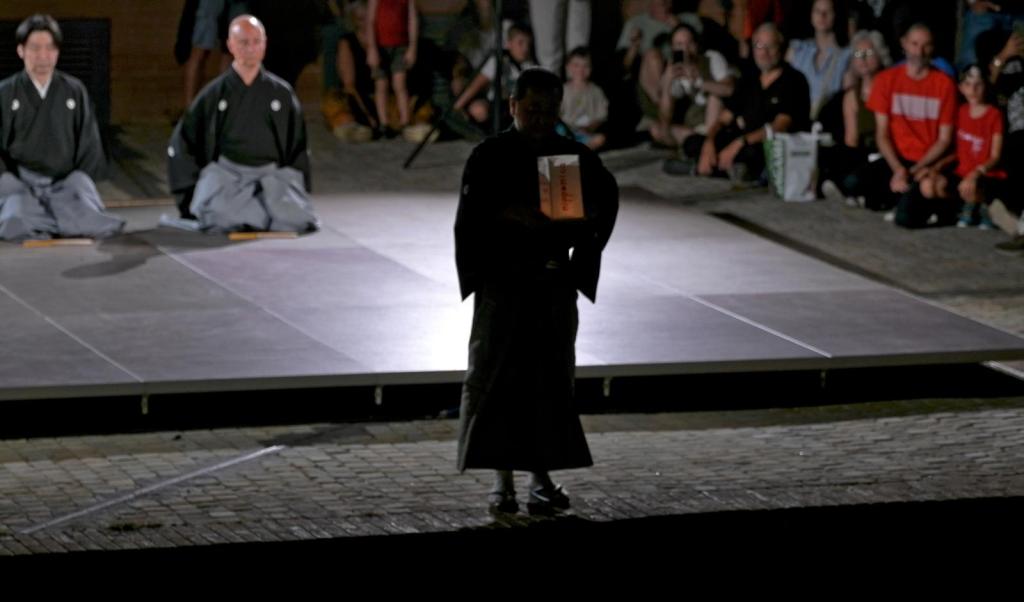
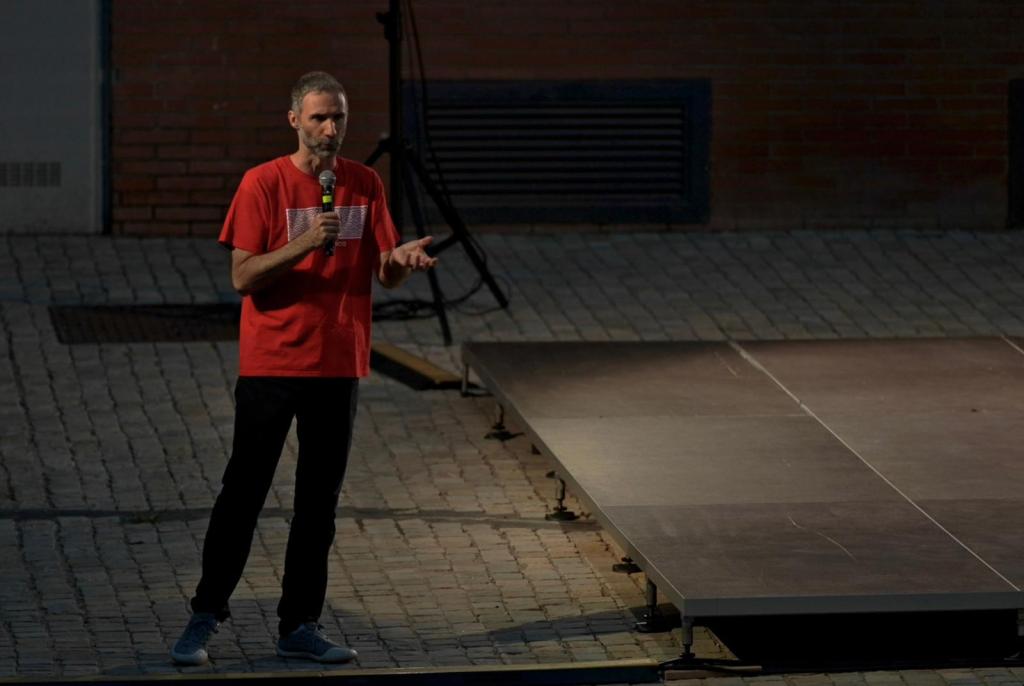
More than 3,500 people gathered in Bologna for this year’s Il Sole di Hiroshima, an event held on August 6 in remembrance of the victims of the atomic bombings of Hiroshima and Nagasaki, as well as all wars. The event was produced by Nipponica, and organized by Dr. Matteo Casari of the University of Bologna. This evening is celebrated every year and culminates with the moving tōrōnagashi ceremony, during which a sea of floating lanterns illuminates the canal crossing the Giardino del Cavaticcio, each serving as a personal tribute to peace.

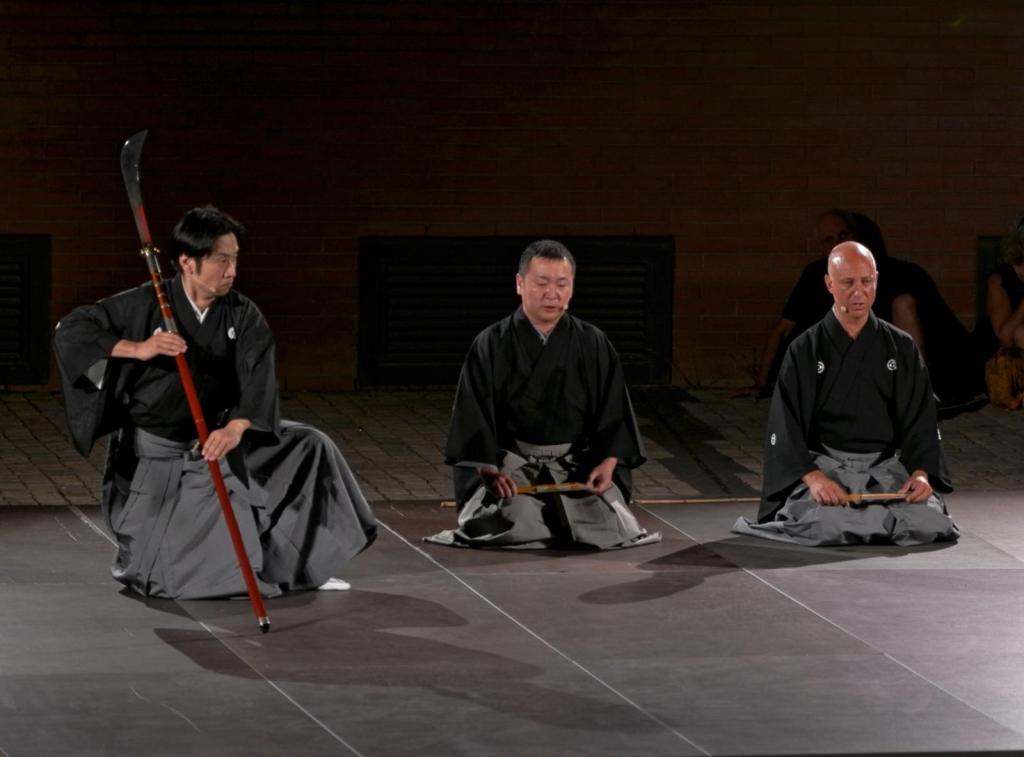
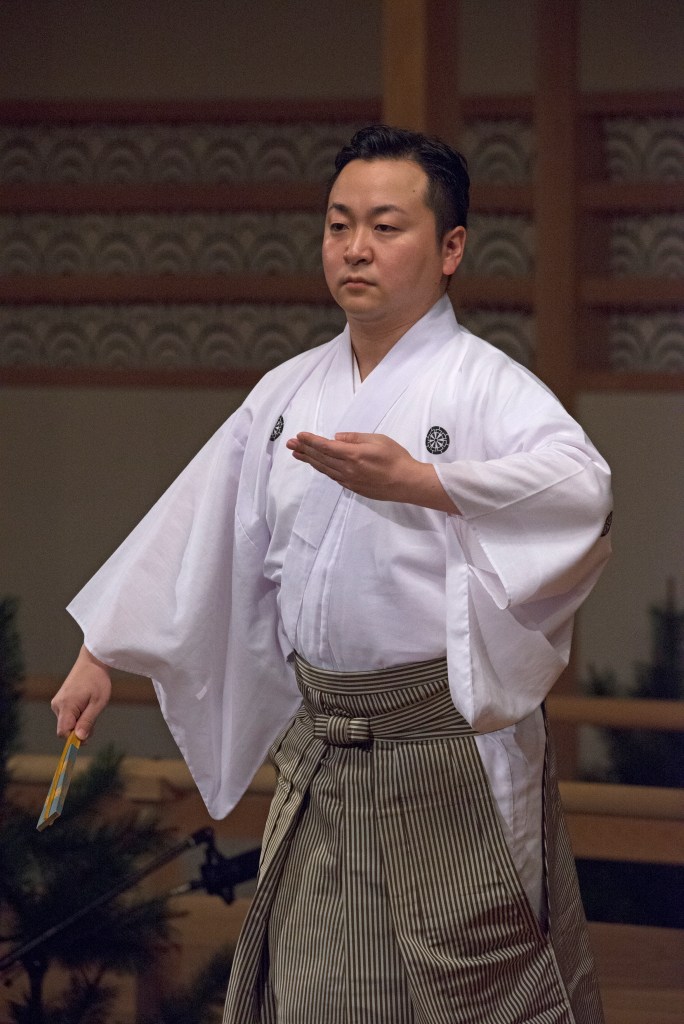
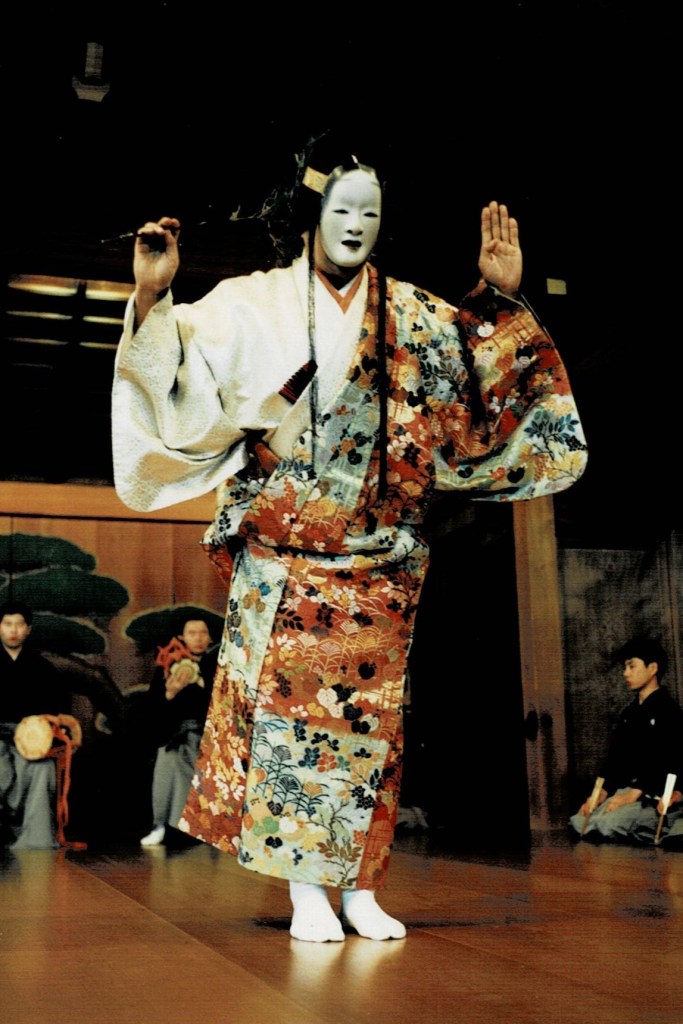
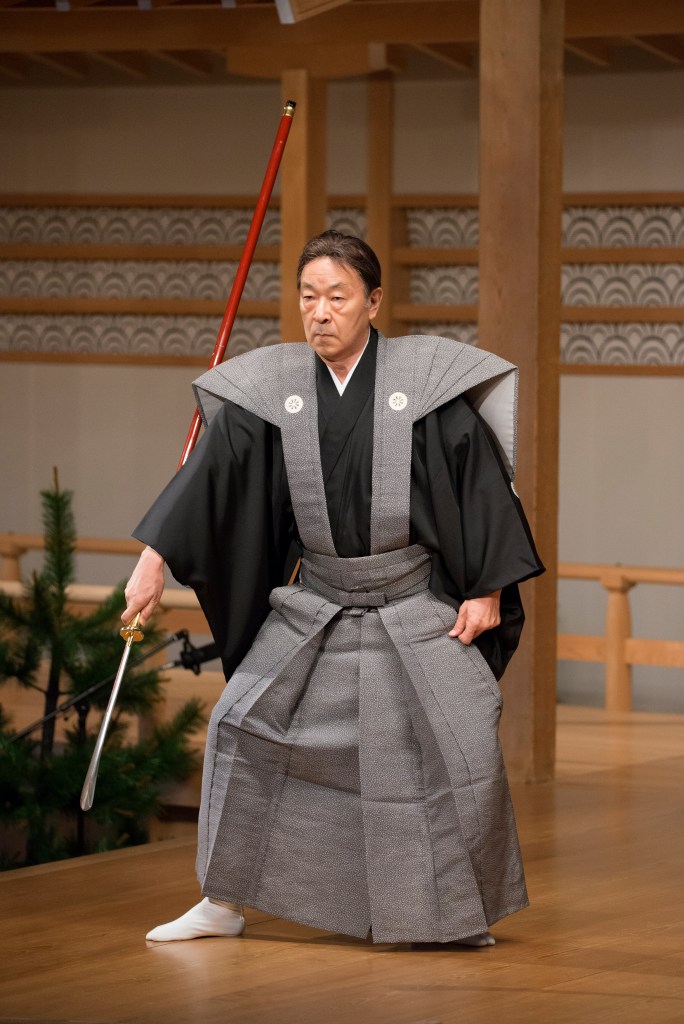
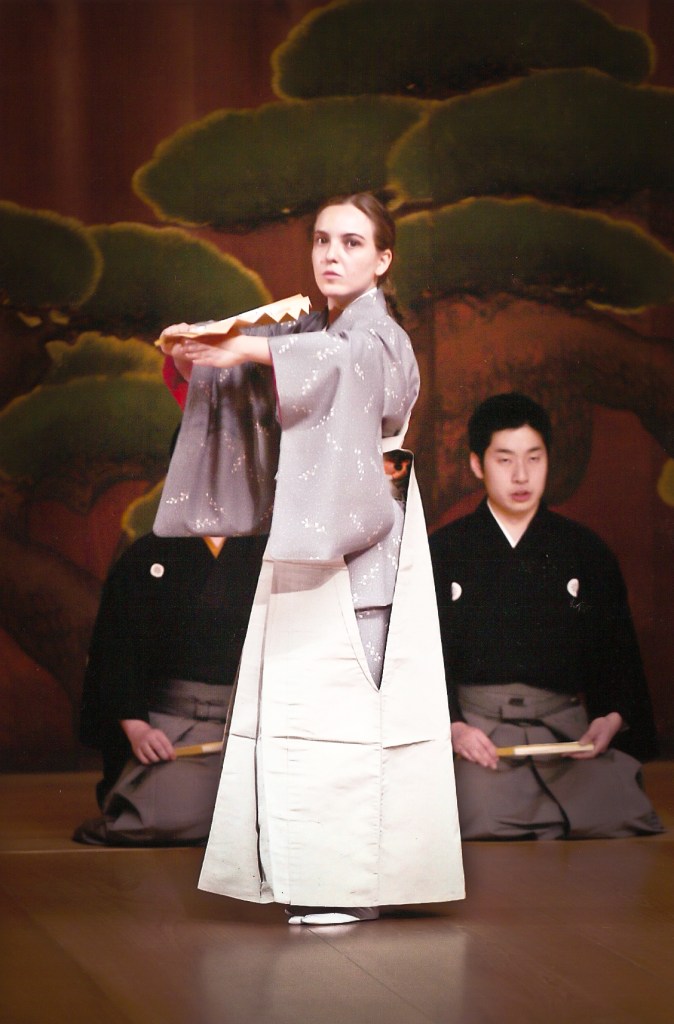
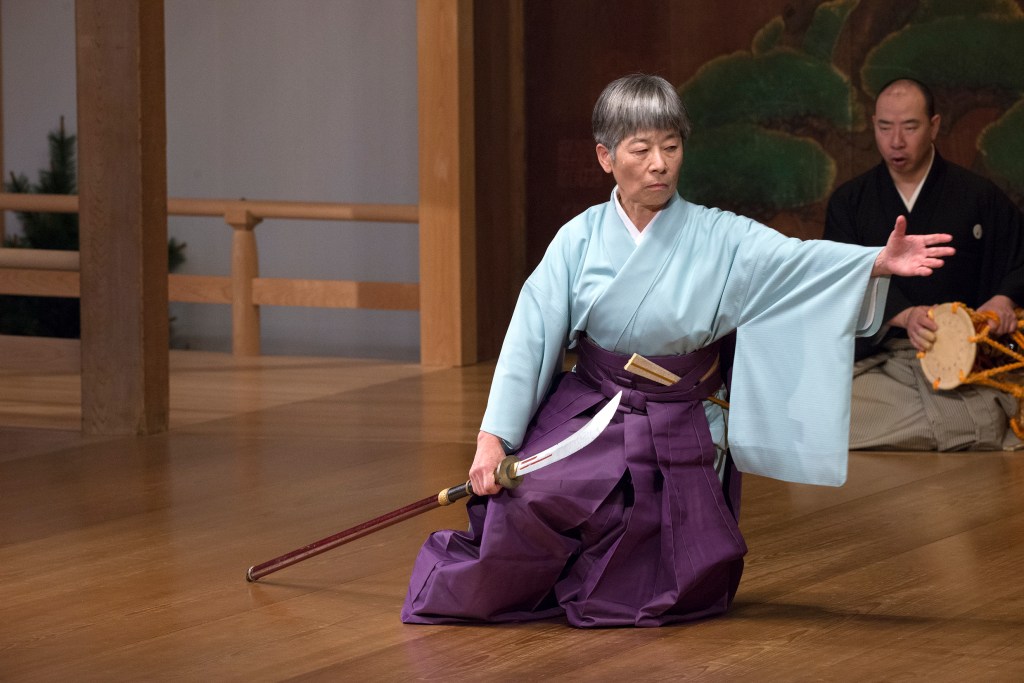
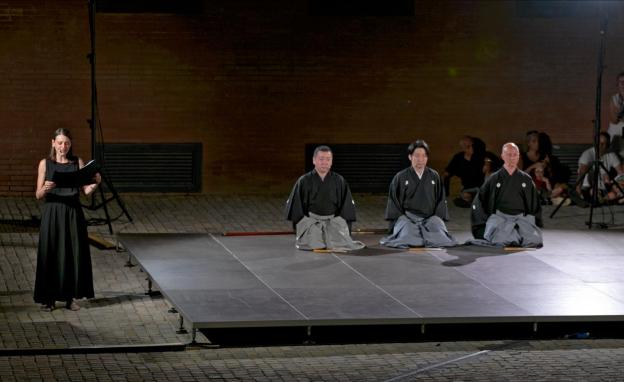
This year the event included four shimai dances from the classical nō repertory. Udaka Tatsushige, Udaka Norishige, and Diego Pellecchia performed selections from TenkoFujitoFuna Benkei, and Hagoromo. Each dance was introduced by a dramatic reading of its text by actor Donatella Allegro, adding a rich narrative layer to the performance.

One of the recurring themes in nō drama is remembrance. Many of the protagonists are ghosts or spirits of individuals marked by traumatic experiences, tormented by jealousy, remorse, or the anguish of oblivion. It is through the telling of their stories that they can finally find peace. Other dramas, however, stage the union between gods and human beings as an expression of the desire for peace and harmony. Although deeply rooted in the cultural context in which it was created and developed, the universal themes of nō and its stylized language allow diverse audiences to connect with the stories represented. Like all masterpieces of theatre, these dramas not only have the ability to fix specific events in memory, but they also act as parables that make us reflect on the cyclical nature of the human experience. Thus, nō seemed to fit perfectly the theme and purpose of the event.

The event was provided to the city at no cost. All donations collected were fully dedicated to supporting AGEOP Ricerca and its vital work with young oncology patients and their families.

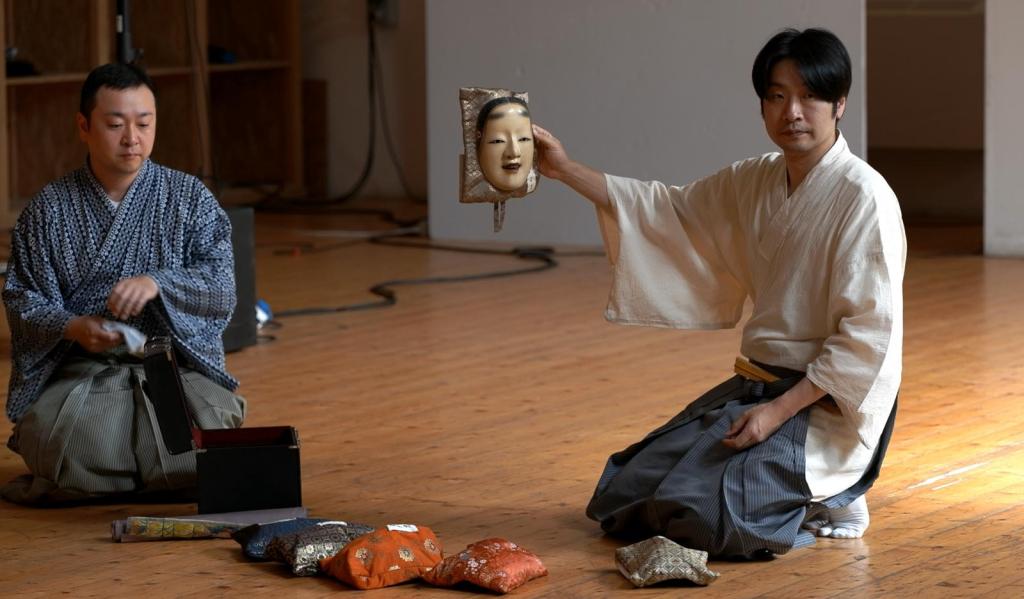
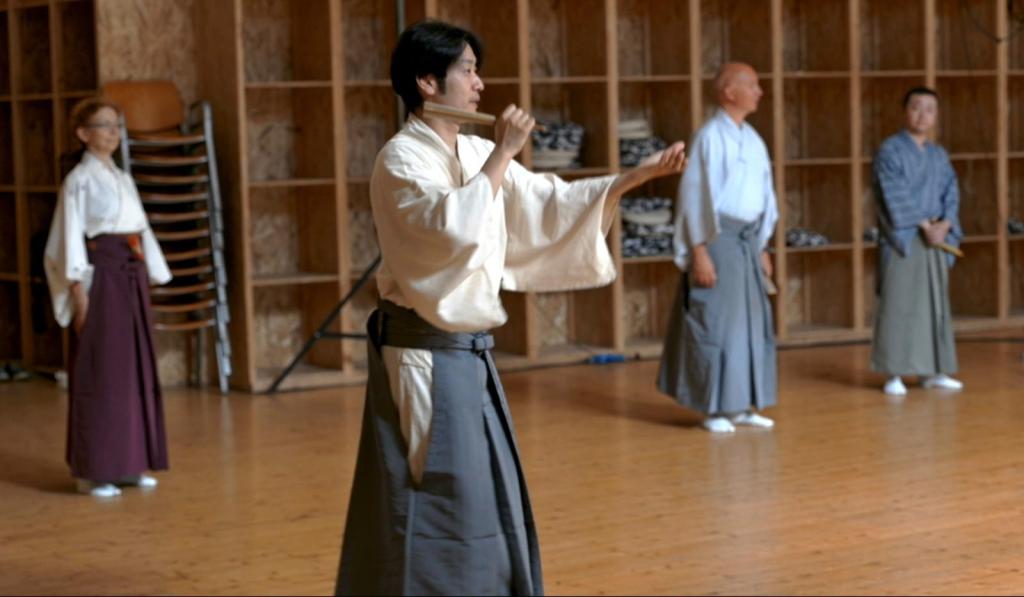
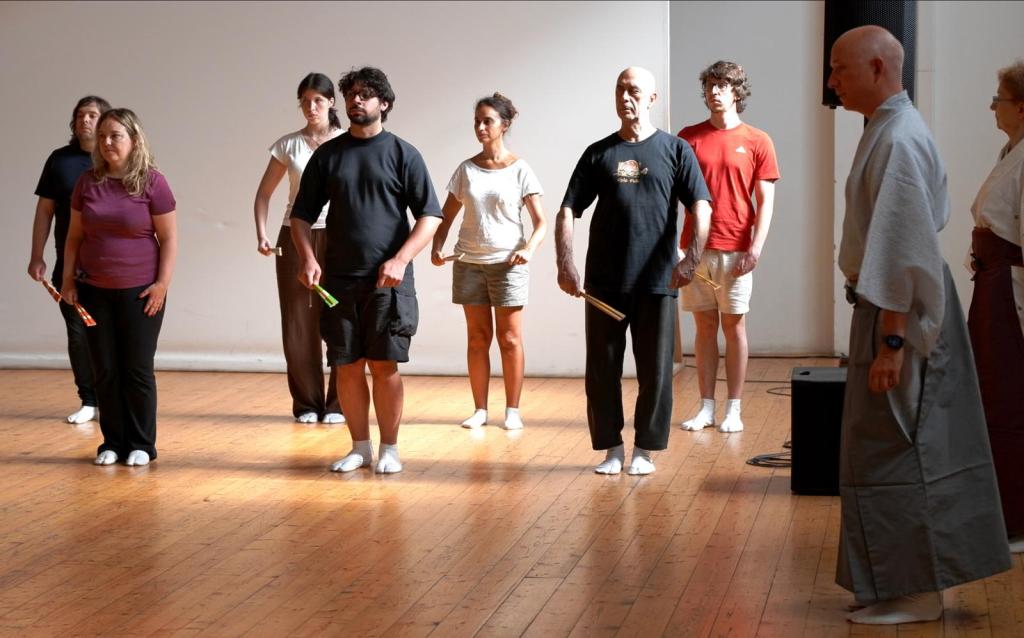
Following the event, a two-day workshop took place at the DAS Dispositivo Arti Sperimentali where participants learned the fundamentals of nō chant and dance. The workshop saw strong attendance from a diverse and engaged group of participants.

Our deepest thanks go to Nipponica for their impeccable organization and to Matteo Casari for his essential support. This important initiative was made possible through their dedication and passion.

Noh dance performance and workshop in Italy, August 6-8 2025

We are thrilled to announce a nō dance performance and 2-day workshop in Bologna, Italy, on August 6-8, 2025. The event is organized by Nipponica in collaboration with the International Noh Institute.

Performance

The performance is part of the event Il Sole di Hiroshima, an evening of remembrance, peace, and solidarity inspired by the Hiroshima tōrōnagashi lantern ceremony, organized by the Nipponica festival. Held on August 6 at the Giardino del Cavaticcio in Bologna, the event includes lantern floating, Japanese food, cultural activities for children, and a special performance of  dance by the Udaka family (Kongō school).

This year’s edition supports AGEOP, a local charity assisting children with cancer. Donations for the lanterns will help fund medical care and free accommodation for families in treatment. Entrance is free.

More info here

Workshop

Nipponica will also host an exceptional intensive workshop dedicated to the art of  theatre—one of the oldest and most refined forms of Japanese stage tradition, where chant, dance, music, and spirituality merge into a performance of profound resonance. Characterized by the essential quality of its choreography, rich symbolism, and deep evocative power,  offers a unique theatrical experience, capable of speaking to contemporary audiences through ancient forms.

The workshop, with a total duration of 8 hours, will be led by Udaka Tatsushige and Udaka Norishige, professional actors of the prestigious Kongō school, and direct heirs of master Udaka Michishige, a key figure in the contemporary transmission of . The event will be coordinated by Diego Pellecchia (Associate Professor, Kyoto Sangyo University – Visiting Professor, Alma Mater Studiorum University of Bologna).

Events details here (Italian only)

Thoughts on the 2024 INI Kyoto Summer Intensive #3 (MC Crosby)

To start to know noh, you must know humility. As children, learning to walk is a milestone, and for noh, it is the same. When you are asked to forget what you understand about standing and begin to move as demons, divine beings, and wandering humans, you strip away the attachment to being right, and instead devote yourself to curiosity.

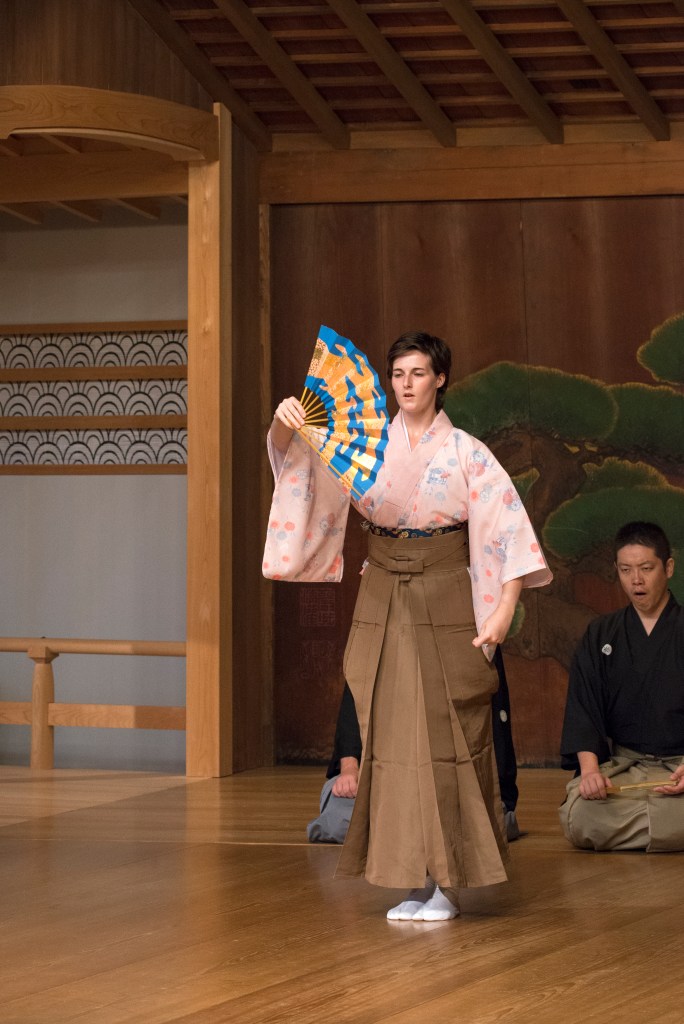
My greatest takeaway from INI’s Noh Intensive is that the simplest gesture or the thinnest wrinkle carved upon a mask can have the grandest meaning. Whether you are the suffering Yuya scanning the horizon for the solace of sakura, or Shojo bestowing the gift of everlasting sake to the generous shopkeeper, all these can be encapsulated in the gaze of the face or stream of the arm. Although there may have been fumbled footwork or warbled words, our eager inquiry into the imagery of the art form stripped us of our pride so we could breathe inside each character.

As the final demonstration ended, my reaction when ducking through the stage door was, “I wish I could perform again.” To me, that is the true sign of inspiration: longing to learn and share more. From the tips of my tabi socks to the final fold of the fan, I hope to humbly offer my knowledge of this art form to others through my work as an educator and writer. May this be the first step, the first kata, in a lifelong dance of coming to know Noh, and cheerily chanting that song to anyone willing to sing along.

(MC Crosby)

[CLOSED] Call for participants – INI Kyoto Summer Intensive 2024

The INI – International Noh Institute announces its 2024 Summer Intensive Program. Applications open April 1 and close April 30.

Who can apply?

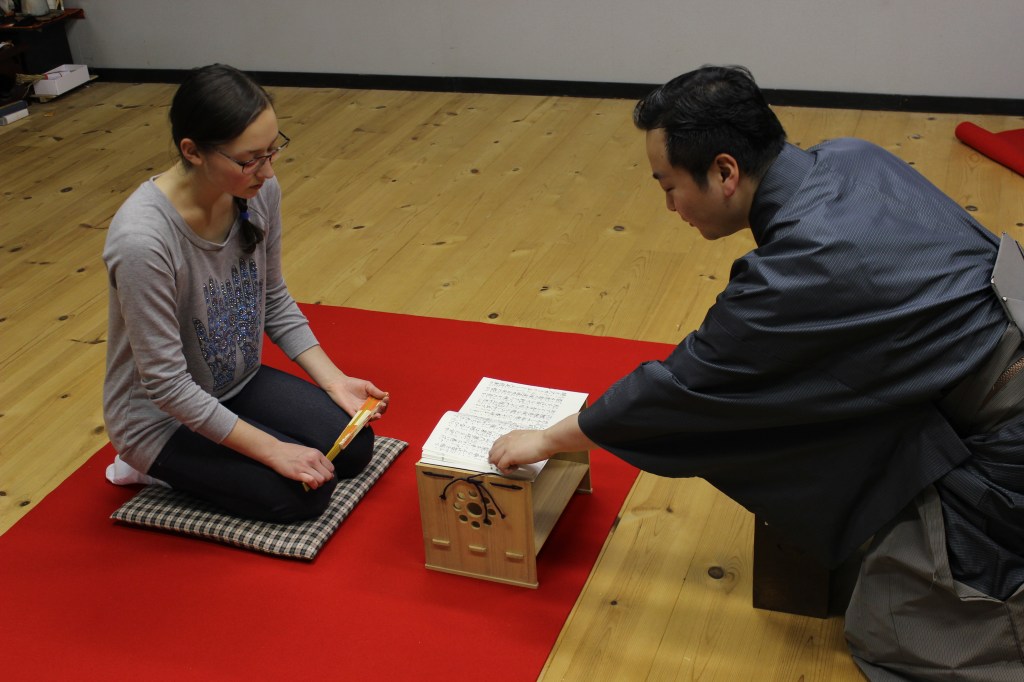
Anyone interested in studying nō chant and/or dance. There is no age limit, and previous knowledge is not required. The course is taught by English-speaking Japanese instructors.

What will participants learn?

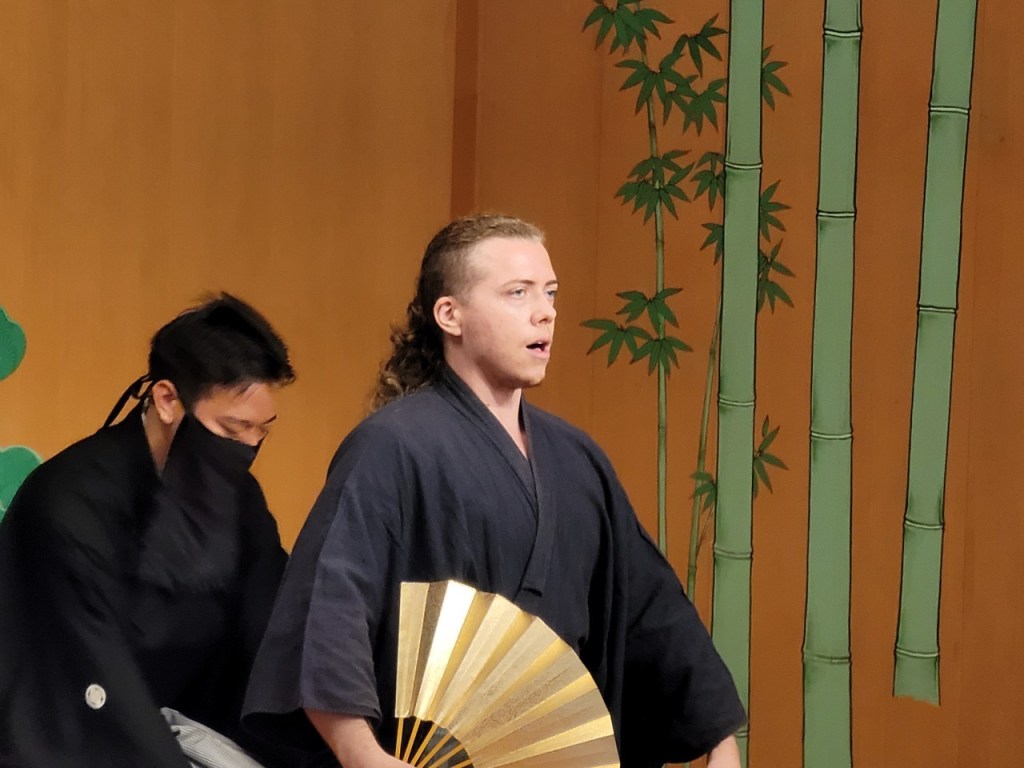
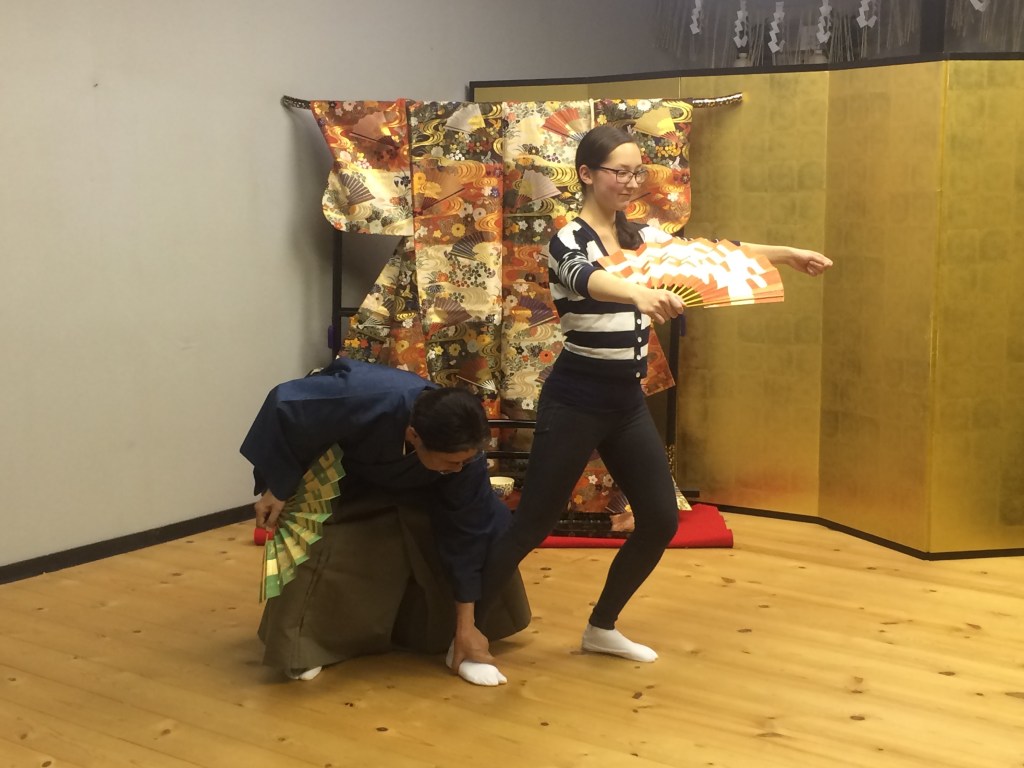
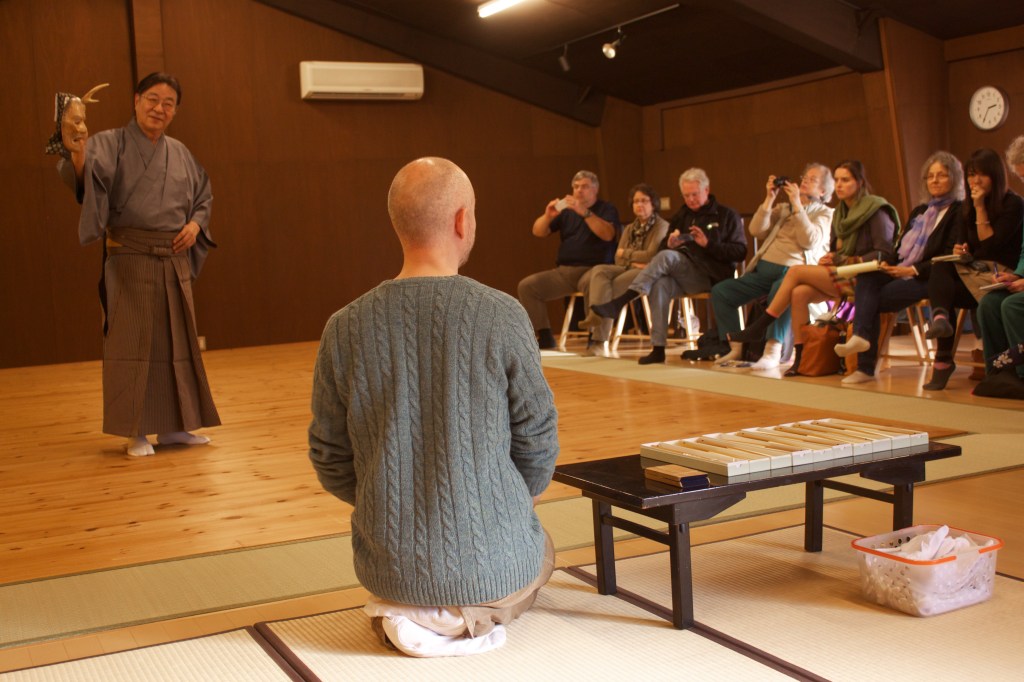
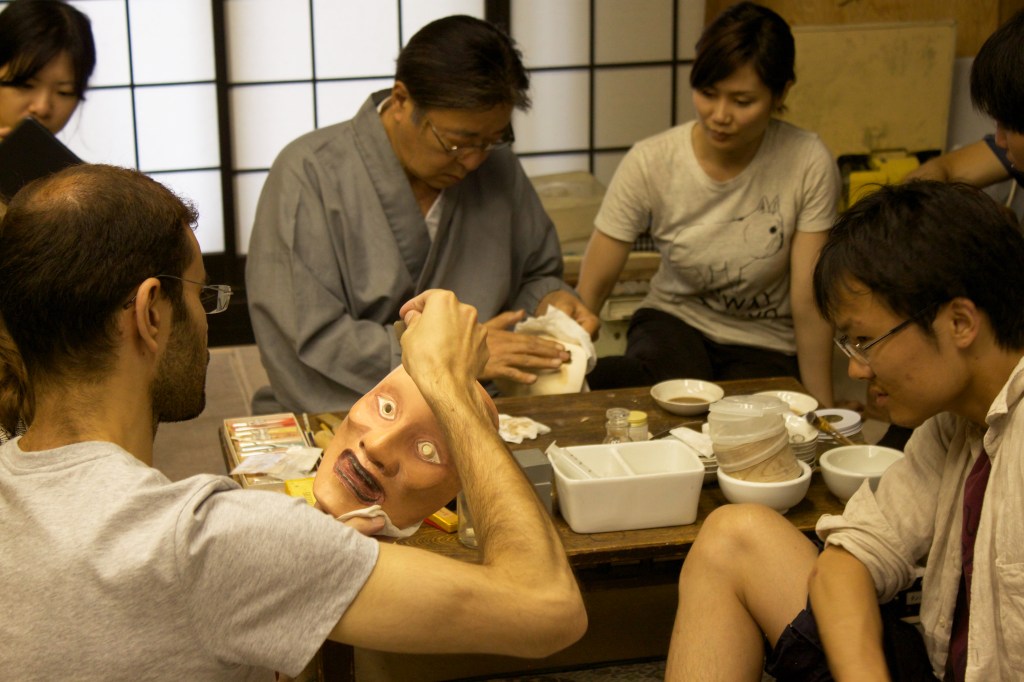
Participants will study nō dance and chant according to the Kongō school tradition, and learn about various aspects of nō performance, including masks and costumes. The training period will culminate in a public recital, where participants will perform supported by professional actors at the Kongō Nō Theatre (details of the performance will be published later).

How does training work?

Nō classes take place daily, in the morning, or in the early afternoon. Participans will be coached by one of our instructors, but will also be encouraged to practice independently in preparation for the following class. A day-to-day calendar will be announced after the selection is complete.

What makes studying with the INI unique? 

The intimate environment in which lessons take place, reflecting the traditional nō training style allows students to interact directly with the teachers. Lessons comprise both group work and one-to-one coaching.

The 2024 edition of our Summer Intensive offers an exclusive opportunity to observe the rehearsals of a full nō performance, which will be staged as part of the final Recital.

Program highlights

  • Train intensively in noh dance and chant. 
  • Practice in a small group for an immersive experience.
  • Perform supported by professional actors.
  • Watch noh performances on traditional stages.
  • Visit noh-related historical locations.
  • Experience living in the ancient capital, Kyoto.

Program details

  • Training period : August 12-25, 2024
  • Recital: August 25
  • Capacity: 6 participants

Instructors: Udaka Tatsushige, Udaka Norishige (Kongō school actors), Udaka Keiko (nō mask carver)

Coordinator: Diego Pellecchia (Kyoto Sangyō University)

Fees

Regular ¥90,000, Student ¥60,000 (includes graduate students)

Fees include: Dance/chant lessons, materials, Kongō school nō fan, participation in the final recital, and a certificate of completion. Fees do not include: White tabi (split-toe socks), transportation, accommodation, and any other personal expenses.

Payments should be paid before the start of the course via bank transfer. Further information regarding payment will accompany the notification of acceptance.

How to apply

Send an email to ini.kyoto[at]gmail.com attaching the following two documents:

  1. Your Curriculum Vitae
  2. A statement of interest (around 300 words)

Application calendar

  • Applications open: April 1 2024
  • Applications close: April 30 2024
  • Outcome announcement: May 15 2024

For more information about the program contact us.


Photographs from past events

Dōjōji memorial performance at the Kongō Nōgakudō (11 December 2022)

Dōjōji holds a special place in all traditional Japanese performing arts. The story of the dedication ceremony for a temple bell which leads to the revelation of its horrific history is one that is met by audiences with anticipation. The original bell, we learn, was destroyed many years before when it was used as a hiding place by a monk fearing for his life. The woman who had been led to believe that the monk would one day take her for his wife learns that this is not true. Her devastation at this betrayal of her love for the monk leads to her transformation into a serpent by her single-minded passion to find him as she follows him to the temple of Dōjōji where he has taken refuge. Finding his hiding place within the bell, she coils her serpent form around it, her passion burning him to a crisp. Priests preparing for the dedication ceremony are warned not to allow any women the temple precincts until after the ceremony is over, but they are no match for the spirit of the woman who come to avenge herself again on the bell, persuading them that as an entertainer is beyond gender. They even find an eboshi, the lacquered hat worn by shirabyoshi dancers, for her so she can perform in celebration of the raising of the bell. 

The nō version of Dōjōji emphasizes the unique relationship between the shite and the musicians, especially the hip and shoulder drums, to express intense primal emotions of resentment and of desire. Each of the two drums has a particular instance when they become one with the actor in his role of the woman seeking her revenge, but finally being driven away by the earnest prayers of the temple monks.

The first performance by a nō actor is considered to be especially important, a coming of age in his mastery of his skills in all aspects of his art, from chant and dance, to costuming as he accomplishes the change into serpent form within the bell and then battles the monks who seek to vanquish the spirit.

Memorial

On Sunday, December 11th, Udaka Norishige, will be performing Dōjōji at the Kongō Nōgakudō as the main feature of a memorial performance observing the sankaiki, or third anniversary of the death of his father, Udaka Michishige, who passed away on March 28, 2020. The traditional way of counting age in this case is based on the concept of cycles, with the first cycle considered to be accomplished at death, the first anniversary a year later, and the third at the end of the second year anticipating the start of the third year after death. Just as asymmetry is preferred over symmetry, odd numbers are considered preferable to even ones and to be more auspicious.

Mask exhibition

This is a performance dedicated to the memory of Udaka Michishige well-known as a performer, mask carver, teacher, and writer of and about nō and nō masks and also an affirmation of the resolve of his three children, mask carver Keiko, and actors Tatsushige and Norishige to continue on the path their father introduced them to and which they now are following each in their own way and also always supporting each other.

Photography exhibition

To this end they are also curating a display of performance photographs of their father, including photos of the three plays he authored and performed in: Shiki: Hototogisu, Genshigumo: Inori, a Prayer for Peace, and Ryōma as well as some of his nō masks. There will be a thirty-minute intermission between the performance by Udaka Tatsushige of the maibayashi of Tenko, the main dance section of a play in which the spirit of a young boy dances in joyful gratitude for religious services offered on his behalf after his death and Dōjōj allowing for more time to see the photos and masks.

This is a very special performance on many levels, and we look forward to seeing you there

December 11th 2022 from 14:00 (doors open at 13:00) at the Kongō Nōgakudō.

Tickets prices are:

 ¥6,000    general admission 

 ¥8,000    A seats  (facing the chorus or far right of stage front) 

 ¥11,000  S (Stage front, toward the back and right of stage front) 

¥13,000  SS (Stage front, closer to the stage) 

To reserve a ticket, contact us

Call for participants – INI Kyoto Summer Intensive 2023

Applications are now closed. Thank you to all the applicants!

The INI – International Noh Institute is now accepting applications for its 2023 Summer Intensive Program

Who can apply?

Anyone interested in studying nō chant and/or dance. There is no age limit, and previous knowledge is not required. The course is taught by English-speaking Japanese instructors.

What will participants learn?

Participants will study nō dance and chant according to the Kongō school tradition, and learn about various aspects of nō performance, including masks and costumes. The training period will culminate with a public recital alongside professional actors on a nō stage located within a gorgeous Kyoto-style traditional townhouse.

How does training work?

Nō classes take place daily, in the morning, or in the early afternoon. Every day you will be coached by one of our instructors, and you will be encouraged to practice independently in preparation for the following class. (A day-to-day calendar will be announced after the selection is complete).

What makes studying with the INI unique? 

The intimate environment in which lessons take place, reflecting the traditional nō training style, allows students to interact directly with the teachers. Lessons comprise both group work and one-to-one coaching.

For this 2023 edition of our Summer Intensive, the INI will collaborate with Discover Noh in Kyoto. Participants will be given the opportunity to explore Kyoto with a professional tour guide, discovering the deep connections between nō and the city.

Program highlights

  • Train intensively in noh dance and chant. 
  • Practice in a small group for an immersive experience.
  • Perform alongside professional actors.
  • Watch noh performances on traditional stages.
  • Visit noh-related historical locations.
  • Experience living in the ancient capital, Kyoto.

Program details

  • Training period : July 10-23, 2023
  • Recital: July 23
  • Fees: Regular ¥80,000 Student ¥60,000 (includes graduate students)
  • Capacity: 6 participants

Fees include : Dance/chant lessons, materials, Kongō school nō fan, participation in the final recital, and a certificate of completion. Fees do not include: White tabi (split-toe socks), transportation, accommodation, and any other personal expenses.

Instructors: Udaka Tatsushige, Udaka Norishige (Kongō school actors), Udaka Keiko (nō mask carver) 

Coordinator: Diego Pellecchia (Kyoto Sangyō University, Certified Kongō school instructor)

How to apply

  • Send an email to ini.kyoto[at]gmail.com attaching the following documents:
  • Your Curriculum Vitae
  • A brief statement of interest (around 300 words)

Application deadline: May, 22nd 2023. Applicants will be notified of the outcome of their application by May, 29th 2023.

For more information about the program contact us.


Photographs from past events

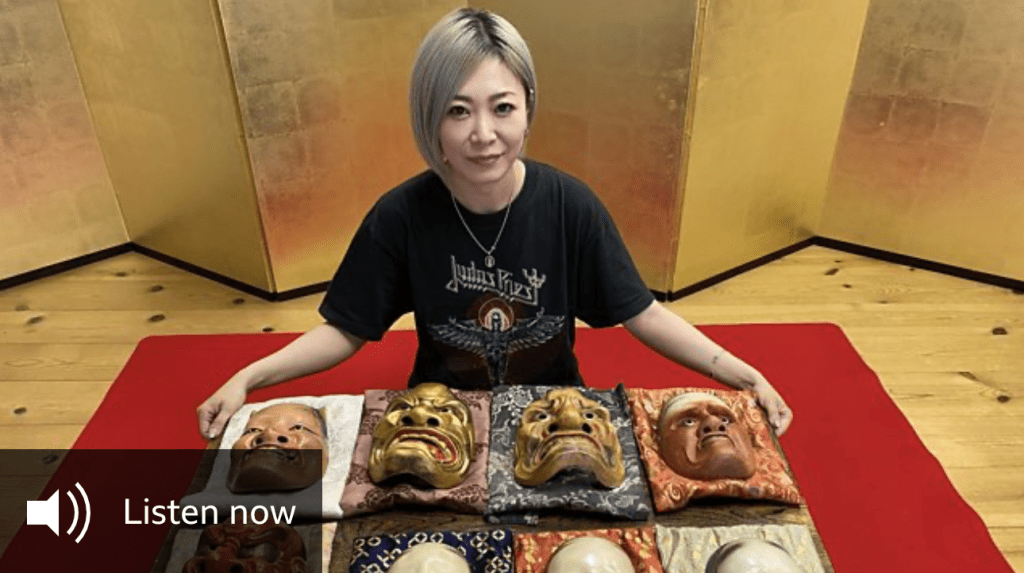
Noh mask carver Udaka Keiko on BBC World

Noh mask carver Udaka Keiko, who also teaches to INI members during workshops and residencies, has recently been interviewed by BBC World for an episode of the popular podcast The Documentary, researching the world of “ojōsan” or young women in contemporary Japanese society. Keiko was asked questions about women and representations of women in noh. You can listen to the episode here.

Some thoughts on Semimaru

This year’s Tatsushige-no-kai, Udaka Tatsushige’s self-produced performance event, features the famous play Semimaru. The masks which will be seen in this performance are the Semimaru from the Kongō collection and a Masukami carved by Udaka Keiko. As the day of the performance approaches (28 August 2022) we asked INI founding member Rebecca Teele Ogamo to share some of her thoughts about this highly poetic and touching play.


Semimaru introduces a prince and princess, Semimaru and his sister Sakagami, who, because of karmic misdeeds in past lives, are forced into circumstances opposite what might be expected of their royal birth. The prince is blind, and the princess is not right in her mind. While there are many legends associated with Semimaru and shrines dedicated to him, such as Seki Semimaru Shrine in Shiga prefecture, Sakagami is an original character created by the author, Zeami.  

At the start of the drama Semimaru because of his affliction, is being taken to be abandoned at a lonely mountain barrier at the order of his father the emperor. Though his eyes are unable to see, he has the insight to understand this seemingly cruel fate as a demonstration of his father’s compassion and concern as he is being allowed the opportunity to make positive advances towards his fate in future lives. A humble sympathizer provides him with a simple hut. His head shaved to indicate he has renounced the world, he is left with his biwa, a kind of lute, of which he is a master. Perhaps we might call him a kind of “old soul.” 

Sakagami, on the other hand, seems to see all too well, the intensity of the passion with which she perceives discrepancies in the order of the world lead her hair to stand on end and her words are taken as wild ravings to be mocked by those she encounters. What is the proper order of things? Seeds planted in the ground manifest as flowers above us; the moon shines in the sky above, while, moonlight, its reflection, penetrates the depths of the sea. An over-active inquiry into such things can lead down the slippery slope of heresy and of madness.

Sakagami’s wanderings after Semimaru has left the capital take her at last to a place where she hears the unexpected sound of a lute which she recognizes and brother and sister meet in the mountain depths. Reunited, they share their mutual pain and sorrow, until drawn by her destiny to wander, Sakagami leaves, even as Semimaru is destined to stay where he is. They part weeping, with Semimaru calling that he hopes his sister will visit again. She turns, her tears, which he cannot see, her answer.

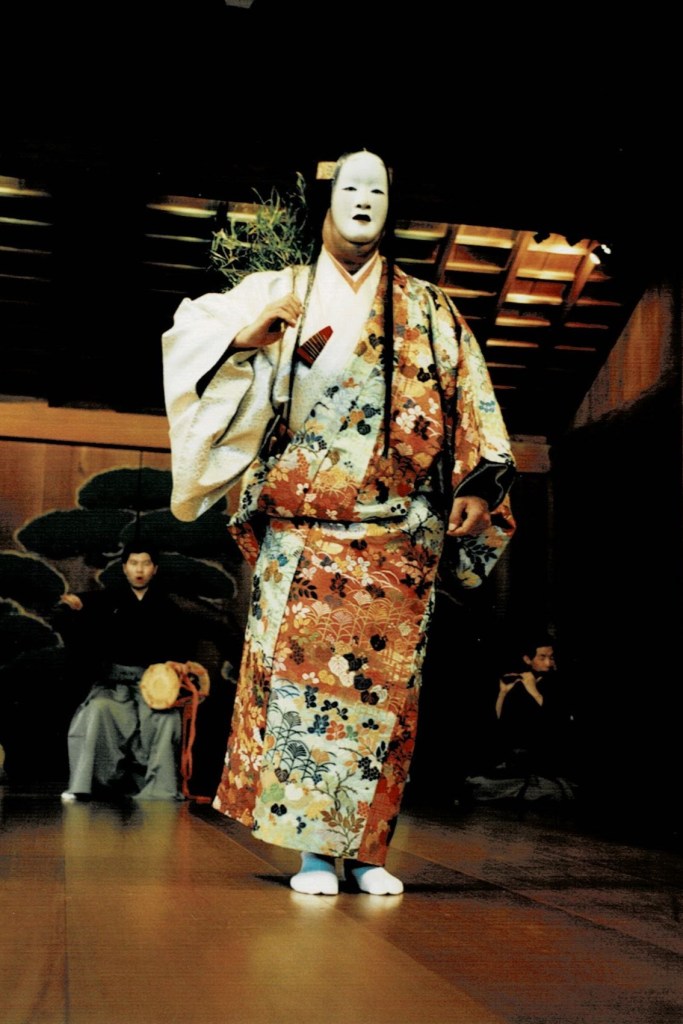
In the photos above, Udaka Tatsushige’s father, the late Udaka Michishige, performs Semimaru at the old Kongō Nō Theatre.

The Semimaru mask used by the Kongō school shows the aristocratic features of a young man who seems in deep meditation, eyes half closed, but other senses alive to other information:  the sound of concern in a retainer’s voice, the feeling of a breeze on the skin, the scents of the forest. The mask seems to accept and absorb what is around it without any negative or judgmental response. Even when the mask is moved, its expression seems to change very little. 

The Masukami mask associated with the Kongō school for the role of Sakagami is seen in roles of goddesses or of women moved by heightened emotions, such as a shrine maiden in a state of possession. As the performer moves, an expression of grief changes to frustration or a cool despair appropriate to a goddess knowing displeasure with the human world, or with fellow divine beings. It is a powerful mask that challenges the viewer to rip aside the veil blurring the distinctions between worlds. A mask called Zo-Onna with similar qualities is often used for the role.

Semimaru is sometimes described as being a terribly tragic play as brother and sister are caught, willy-nilly, by a karmic fate that seems unbearably cruel. My own impression, through the power of the masks I’ve seen in performance, is of two survivors who deal with their fate differently, one with acceptance, the other with resistance, who meet and share nurturing tears, before parting to fulfill their destinies. Through the creation of the role of Sakagami Zeami introduces a meditation on an understanding and approach to the conundrums of life which are as immediate today as when the play was written.

Rebecca Teele Ogamo

Call for participants – INI Kyoto Summer Intensive 2022

The INI – International Noh Institute is now accepting applications for its 2022 Summer Intensive Program. Participants will study noh dance and chant according to the Kongo school tradition, and learn about various aspects of noh performance, including masks and costumes. The training period will culminate with the participation in a recital.

Program highlights

  • Train intensively in noh dance and chant. Practice in a small group for an immersive experience.
  • Perform with professional actors.
  • Watch noh performances on traditional stages.
  • Visit noh-related historical locations.
  • Experience living in the ancient capital, Kyoto.

Details

  • Training period : July 11-24, 2022
  • Recital: July 24th
  • Fees: Regular ¥ 70,000 Repeater ¥ 60,000 INI member ¥50,000
  • Capacity: 8 participants

Fees include : Dance/chant lessons, materials, Kongo school fan, participation in the July 24th recital, and a certificate of completion. Fees do not include: White tabi (split-toe socks – around ¥700- ¥1000/pair) Transportation, accommodation, and any other personal expenses.

Instructors: Udaka Tatsushige, Udaka Norishige (Kongo school actors), Udaka Keiko (noh mask carver) 

Director: Diego Pellecchia (Kyoto Sangyo University)

How to apply: Send an email to ini.kyoto[at]gmail.com Please attach your C.V. and a brief statement of interest. We are aware that traveling may be difficult during the current pandemic. Feel free to contact us for more information about the program.

Application deadline: June, 5th 2022

Photographs from past events