Udaka Keiko, Tatsushige and Norishige have decided to carry on the Udaka Seiran Noh performance event which their late father, Udaka Michishige, has hosted for many years.
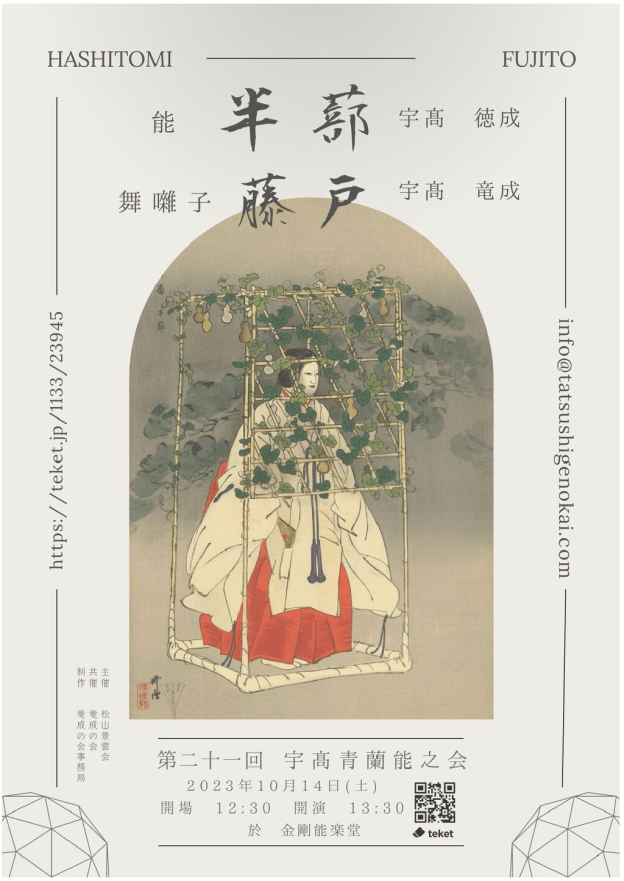
In the 21st Udaka Seiran Noh, the second son, Norishige, will perform the play Hashitomi which is based on The Tale of Genji. In the play, the mask Magojirō, created specifically for this occasion by the eldest daughter, Keiko, will be used. Additionally, the eldest son, Tatsushige, will perform the dance excerpt Fujito, which is based on The Tale of the Heike.
In Hashitomi, the ghost of Lady Yūgao appears, delicately and evanescently depicting her romantic memories with Hikaru Genji. In Fujito, the ghost of a fisherman who got entangled in the Genpei battle appears, speaking of his grudges and suffering.
I came to know nō theater through practicing traditional Japanese dance and watching the performance of the play Shakkyō in Hong Kong, where I was captivated by the mystery and mastery of nō. After facing various difficulties and setbacks in 2023, it was a great honor for me to participate in a two-week intensive training program in Noh theater in Kyoto. Amidst the hot summer days and the vibrant atmosphere of the Gion Festival, the two weeks of training allowed us to immerse ourselves in the artistic ambiance of Kyoto.
The three masters, Diego-sensei, Tatsushige-sensei, and Norishige-sensei, each possessed unique characteristics and taught the six of us, students from different parts of the world, in a meticulous and easy-to-understand manner. Diego-sensei offered detailed guidance on movements and storytelling; Tatsushige-sensei imparted wisdom from philosophical, Zen, and Shintō perspectives; and Norishige-sensei demonstrated movements akin to flowing water and gentle breeze, providing us with a full-body experience.
Although each student came from a vastly different background, everyone invested their wholehearted effort to excel. We were also fortunate to attend Keiko-sensei’s nō mask-making workshop, learn about the Gion Festival’s Yoiyama evening, receive assistance and translation from Monique-sensei, and have the experience of watching a Noh performance. In every aspect, the program provided a rich tapestry of nō-related experiences within the brief span of two weeks.
I am grateful for the encouragement and inspiration I received from the masters, which enabled me to participate with great honor in the final Noh theater performance, showcasing the fruits of two weeks of intensive training to family and friends. As the training period flew by, I found myself wishing that time could stand still to preserve these wonderful memories. I extend my gratitude to everyone who contributed to making this experience possible and to all my friends for their unwavering support.
Having the opportunity to learn and immerse myself in Noh theater in Japan under the guidance of Diego Sensei, Tatsushige Sensei, Norishige Sensei, Keiko Sensei, and Monique Sensei has been a life-changing experience that I will cherish for the rest of my life. I am grateful for the wise words, love, and passion that you have all shared with me, and for the trust that you have placed in me. You have helped me to fall even more in love with Noh and with my profession.
This summer, I had the privilege of joining five other participants from around the world in the esteemed Summer Intensive Programme of the International Noh Institute.
Central to the programme was the invaluable access to renowned Noh teachers, namely Udaka Tatsushige, Udaka Norishige and Diego Pellecchia, as well as the support and kind guidance of Monique Arnaud. Their expertise and dedication to preserving Noh as an art form were evident throughout their teachings.
Beyond the technical aspects of Noh – namely lessons on chanting and studying the movements known as kata which make up the dance part – the programme encouraged profound discussions on the artistic and philosophical underpinnings of the Noh plays and the essence of Noh itself. These in-depth conversations highlighted the spiritual dimensions of the performances.
One thought which crossed my mind was about how the essence of noh bears many similarities to the traditional concept of ‘the way’ or ‘dō’(道) ‒ evident in practices like the Way of the tea (Sadō), the way of the Sword (kendō) or the Way of the Brush (Shodō). Noh theatre, much like the traditional ways, places emphasis on dedicated practice, honing skills over a lifetime and seeking a deeper connection with the art itself. The philosophy of self-improvement and enlightenment, inherent in the ways, is equally present in the practice of Noh. Discussing this shared ethos between Noh theatre and the philosophy of the way with our teacher highlights how Noh is transcending the surface of a mere theatrical performance into a holistic art form encompassing spiritual and philosophical aspects, making Noh a transformative journey for the performer.
Another particularly memorable and spontaneous occurrence emerged during a discussion on masks from the Noh play Kanawa. As a thunderstorm raged outside we were shown the corresponding mask to the play with the lights turned off and just a single candle lit, creating a captivating atmosphere and highlighting the masks man facets so different to the masks we see in artificial light.
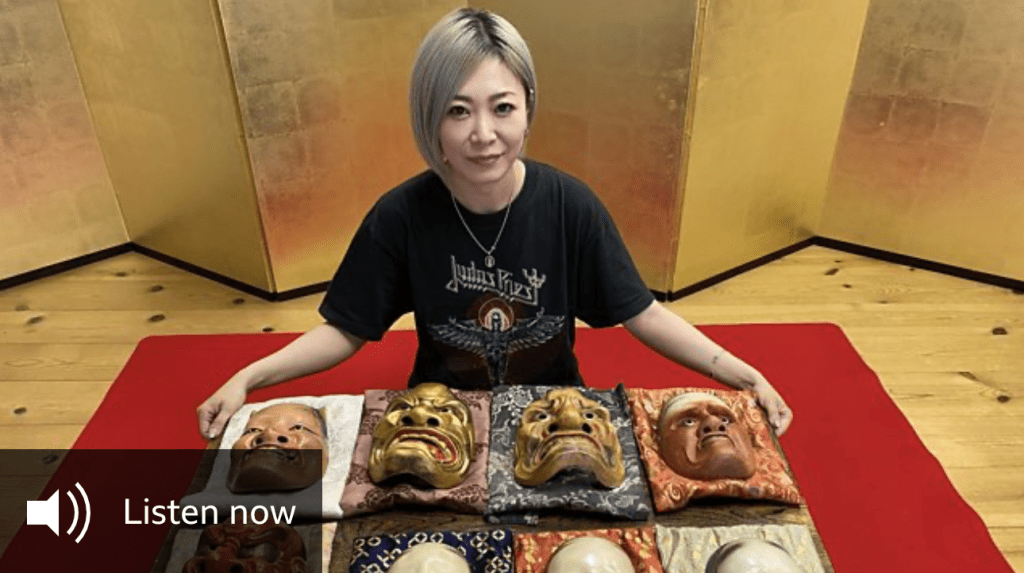
Since masks play a central role in Noh theater, interacting with mask carver Udaka Keiko was undoubtedly one of the highlights. She patiently listened to our many probing questions and showed us a large repertoire of different masks.
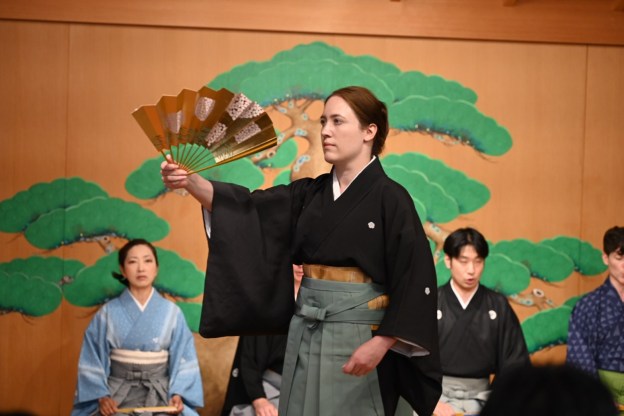
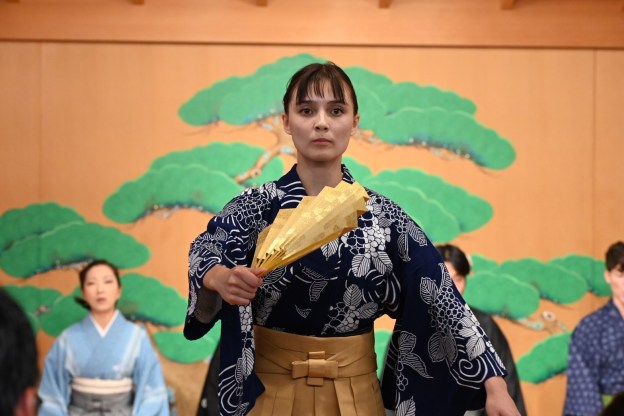
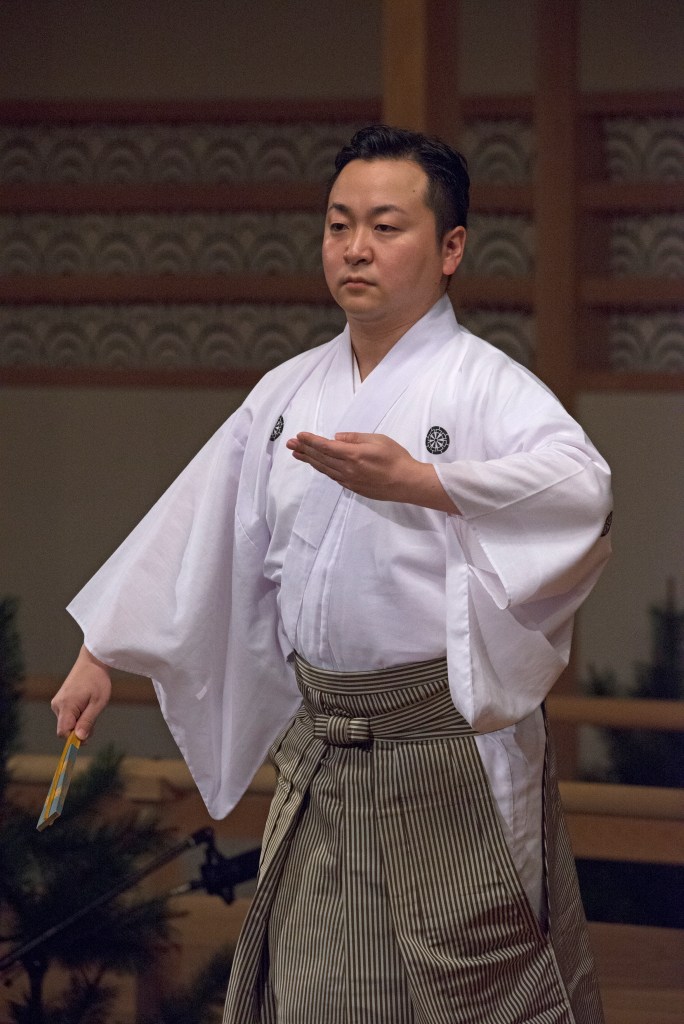
Culminating in the programme was the privilege of participating in a Noh performance on the closing day. Each participant chose one of the three dances we studied to bring to the stage, and in the end our teachers also contributed their pieces. Coming back to the before mentioned pondering of how the teachings of the way are reflected in Noh, I believe this shapes not only the performer but also deeply resonates with the audience. As a result the audience is invited not just to a theatrical spectacle but to witness an expression of spiritual value.
In conclusion, the summer intensive programme at the International Noh Institute offered a transformative journey into the world of Noh, fostering artistic appreciation but also intellectual growth and personal reflection that goes deeper than just the movements one might perceive on the stage. The opportunity to learn directly from accomplished Noh masters, engage in profound discussions, witness captivating demonstrations and perform on stage contributed to a deeply enriching experience.
A few weeks have passed since the 2023 INI Kyoto Summer Intensive workshop and recital. Those of you who follow us on our social media have already seen a few photographs of the event. As always, we invite our participants to enrich our blog with their insightful impressions and thoughtful reflections drawn from their training experience. This is the first of a series – more will follow, so stay tuned!
“The INI Summer Intensive 2023 offers an intense and valuable experience. During the span of two weeks we where guided into the world of Noh, and I must say we learned a lot. As a performer it has been extremely valuable to be able to trust in something unknown, and embody Noh together with different teachers. By learning the basics, and somehow embodying it, we are offered another understanding of what the art of performing can be. I would recommend this experience to anyone with an interest in Noh, Japanese culture, or theatre culture in general.”
Dōjōji holds a special place in all traditional Japanese performing arts. The story of the dedication ceremony for a temple bell which leads to the revelation of its horrific history is one that is met by audiences with anticipation. The original bell, we learn, was destroyed many years before when it was used as a hiding place by a monk fearing for his life. The woman who had been led to believe that the monk would one day take her for his wife learns that this is not true. Her devastation at this betrayal of her love for the monk leads to her transformation into a serpent by her single-minded passion to find him as she follows him to the temple of Dōjōji where he has taken refuge. Finding his hiding place within the bell, she coils her serpent form around it, her passion burning him to a crisp. Priests preparing for the dedication ceremony are warned not to allow any women the temple precincts until after the ceremony is over, but they are no match for the spirit of the woman who come to avenge herself again on the bell, persuading them that as an entertainer is beyond gender. They even find an eboshi, the lacquered hat worn by shirabyoshi dancers, for her so she can perform in celebration of the raising of the bell.
The nō version of Dōjōji emphasizes the unique relationship between the shite and the musicians, especially the hip and shoulder drums, to express intense primal emotions of resentment and of desire. Each of the two drums has a particular instance when they become one with the actor in his role of the woman seeking her revenge, but finally being driven away by the earnest prayers of the temple monks.
The first performance by a nō actor is considered to be especially important, a coming of age in his mastery of his skills in all aspects of his art, from chant and dance, to costuming as he accomplishes the change into serpent form within the bell and then battles the monks who seek to vanquish the spirit.
Memorial
On Sunday, December 11th, Udaka Norishige, will be performing Dōjōji at the Kongō Nōgakudō as the main feature of a memorial performance observing the sankaiki, or third anniversary of the death of his father, Udaka Michishige, who passed away on March 28, 2020. The traditional way of counting age in this case is based on the concept of cycles, with the first cycle considered to be accomplished at death, the first anniversary a year later, and the third at the end of the second year anticipating the start of the third year after death. Just as asymmetry is preferred over symmetry, odd numbers are considered preferable to even ones and to be more auspicious.
Mask exhibition
This is a performance dedicated to the memory of Udaka Michishige well-known as a performer, mask carver, teacher, and writer of and about nō and nō masks and also an affirmation of the resolve of his three children, mask carver Keiko, and actors Tatsushige and Norishige to continue on the path their father introduced them to and which they now are following each in their own way and also always supporting each other.
Photography exhibition
To this end they are also curating a display of performance photographs of their father, including photos of the three plays he authored and performed in: Shiki: Hototogisu, Genshigumo: Inori, a Prayer for Peace, and Ryōma as well as some of his nō masks. There will be a thirty-minute intermission between the performance by Udaka Tatsushige of the maibayashi of Tenko, the main dance section of a play in which the spirit of a young boy dances in joyful gratitude for religious services offered on his behalf after his death and Dōjōj allowing for more time to see the photos and masks.
This is a very special performance on many levels, and we look forward to seeing you there
December 11th 2022 from 14:00 (doors open at 13:00) at the Kongō Nōgakudō.
Tickets prices are:
¥6,000 general admission
¥8,000 A seats (facing the chorus or far right of stage front)
¥11,000 S (Stage front, toward the back and right of stage front)
Applications are now closed. Thank you to all the applicants!
The INI – International Noh Institute is now accepting applications for its 2023 Summer Intensive Program
Who can apply?
Anyone interested in studying nō chant and/or dance. There is no age limit, and previous knowledge is not required. The course is taught by English-speaking Japanese instructors.
What will participants learn?
Participants will study nō dance and chant according to the Kongō school tradition, and learn about various aspects of nō performance, including masks and costumes. The training period will culminate with a public recital alongside professional actors on a nō stage located within a gorgeous Kyoto-style traditional townhouse.
How does training work?
Nō classes take place daily, in the morning, or in the early afternoon. Every day you will be coached by one of our instructors, and you will be encouraged to practice independently in preparation for the following class. (A day-to-day calendar will be announced after the selection is complete).
What makes studying with the INI unique?
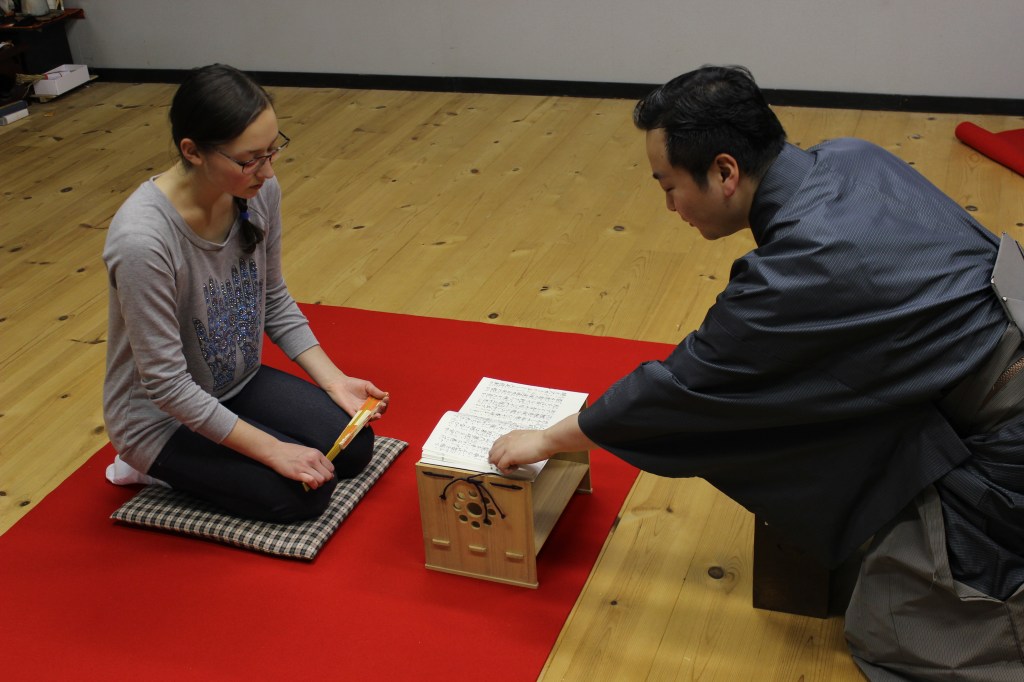
The intimate environment in which lessons take place, reflecting the traditional nō training style, allows students to interact directly with the teachers. Lessons comprise both group work and one-to-one coaching.
For this 2023 edition of our Summer Intensive, the INI will collaborate with Discover Noh in Kyoto. Participants will be given the opportunity to explore Kyoto with a professional tour guide, discovering the deep connections between nō and the city.
Program highlights
Train intensively in noh dance and chant.
Practice in a small group for an immersive experience.
Fees include : Dance/chant lessons, materials, Kongō school nō fan, participation in the final recital, and a certificate of completion. Fees do not include: White tabi (split-toe socks), transportation, accommodation, and any other personal expenses.
Noh mask carver Udaka Keiko, who also teaches to INI members during workshops and residencies, has recently been interviewed by BBC World for an episode of the popular podcast The Documentary, researching the world of “ojōsan” or young women in contemporary Japanese society. Keiko was asked questions about women and representations of women in noh. You can listen to the episode here.
This year’s Tatsushige-no-kai, Udaka Tatsushige’s self-produced performance event, features the famous play Semimaru. The masks which will be seen in this performance are the Semimaru from the Kongō collection and a Masukami carved by Udaka Keiko. As the day of the performance approaches (28 August 2022) we asked INI founding member Rebecca Teele Ogamo to share some of her thoughts about this highly poetic and touching play.
Semimaru introduces a prince and princess, Semimaru and his sister Sakagami, who, because of karmic misdeeds in past lives, are forced into circumstances opposite what might be expected of their royal birth. The prince is blind, and the princess is not right in her mind. While there are many legends associated with Semimaru and shrines dedicated to him, such as Seki Semimaru Shrine in Shiga prefecture, Sakagami is an original character created by the author, Zeami.
At the start of the drama Semimaru because of his affliction, is being taken to be abandoned at a lonely mountain barrier at the order of his father the emperor. Though his eyes are unable to see, he has the insight to understand this seemingly cruel fate as a demonstration of his father’s compassion and concern as he is being allowed the opportunity to make positive advances towards his fate in future lives. A humble sympathizer provides him with a simple hut. His head shaved to indicate he has renounced the world, he is left with his biwa, a kind of lute, of which he is a master. Perhaps we might call him a kind of “old soul.”
Sakagami, on the other hand, seems to see all too well, the intensity of the passion with which she perceives discrepancies in the order of the world lead her hair to stand on end and her words are taken as wild ravings to be mocked by those she encounters. What is the proper order of things? Seeds planted in the ground manifest as flowers above us; the moon shines in the sky above, while, moonlight, its reflection, penetrates the depths of the sea. An over-active inquiry into such things can lead down the slippery slope of heresy and of madness.
Sakagami’s wanderings after Semimaru has left the capital take her at last to a place where she hears the unexpected sound of a lute which she recognizes and brother and sister meet in the mountain depths. Reunited, they share their mutual pain and sorrow, until drawn by her destiny to wander, Sakagami leaves, even as Semimaru is destined to stay where he is. They part weeping, with Semimaru calling that he hopes his sister will visit again. She turns, her tears, which he cannot see, her answer.
In the photos above, Udaka Tatsushige’s father, the late Udaka Michishige, performs Semimaru at the old Kongō Nō Theatre.
The Semimaru mask used by the Kongō school shows the aristocratic features of a young man who seems in deep meditation, eyes half closed, but other senses alive to other information: the sound of concern in a retainer’s voice, the feeling of a breeze on the skin, the scents of the forest. The mask seems to accept and absorb what is around it without any negative or judgmental response. Even when the mask is moved, its expression seems to change very little.
The Masukami mask associated with the Kongō school for the role of Sakagami is seen in roles of goddesses or of women moved by heightened emotions, such as a shrine maiden in a state of possession. As the performer moves, an expression of grief changes to frustration or a cool despair appropriate to a goddess knowing displeasure with the human world, or with fellow divine beings. It is a powerful mask that challenges the viewer to rip aside the veil blurring the distinctions between worlds. A mask called Zo-Onna with similar qualities is often used for the role.
Semimaru is sometimes described as being a terribly tragic play as brother and sister are caught, willy-nilly, by a karmic fate that seems unbearably cruel. My own impression, through the power of the masks I’ve seen in performance, is of two survivors who deal with their fate differently, one with acceptance, the other with resistance, who meet and share nurturing tears, before parting to fulfill their destinies. Through the creation of the role of Sakagami Zeami introduces a meditation on an understanding and approach to the conundrums of life which are as immediate today as when the play was written.
We decided to hold the INI Summer Intensive Workshop in the summer of 2022, while Japan still kept its borders closed to those without a residence/work/study visa, knowing that it would be difficult to welcome guests from abroad. We were glad to receive a number of requests, though only two applicants, Arden Taylor (USA) and Florian Ehrard (GER) were eventually able to participate. While Florian already studied with the INI in the past, Arden joined us for the first time. Arden was kind enough to sent us a thoughtful reflection on the his experience with the INI.
Diego Pellecchia – INI Program Coordinator
I consider myself extraordinarily lucky to have had the chance to participate in the International Noh Institute’s summer training program 2022. I am still a novice in noh, having begun my studies of the texts in the third year of my MA at the University of Washington’s Japanese literature program. There is so much to explore just in the renga-influenced text itself, even though I do enjoy the performances, that I assumed (as is perhaps the vice of most literature majors) that the most interesting part of noh was its text. I never could have imagined, before experiencing it first hand, what it really means for a performance tradition to be “transmitted.”
For this year’s program, we had three instructors: Diego Pellecchia, Udaka Tastushige and Udaka Norishige. Diego was our contact while preparing for the program, and was the most strict with us (which I was grateful for) about etiquette during practice. As an American, and particularly a white masculine academic, I recognize the need to practice cultural appreciation rather than appropriation, and Diego was able to help us to be as respectful as possible and to convey our gratitude. Diego is also a professor at Kyoto Sangyo University, which means that he was able to impart not only the practical, but also the academic features of noh throughout our practice. Diego’s passion for the art is contagious, and the seriousness with which he treats it gives weight to everything we do together.
The two brothers who were our main instructors, Udaka Tatsushige and Udaka Norishige, had nearly opposite teaching styles, but both myself and my cohort agreed that we felt incredibly lucky precisely because of this. The two styles could be summarized thusly: start from the mind, and start from the body. Like Diego, most of Tatsushige’s lessons were conducted in English. Tatsushige speaks excellent English and takes a very cerebral approach to his practice, which he is very good at conveying. He claims that the process of learning noh was not instinctive for him, and exactly because of that, he developed his own method for conceiving of the motions and intentions behind standard forms in the dance and acting aspects of the performance. It is difficult for me to put into words how much I felt was generously given to me in our talks between practice.
Norishige, on the other hand, more often focuses on the precision of the movements themselves. He speaks in a soft and endearing Kyoto accent, and most often arrived to practice in a yukata. On our first day, he offered us tea and Japanese sweets with the traditional Kyoto omotenashi (welcoming spirit). In addition to the precise corrections of our movements (which effectively cross any language barrier, as they only require observation and imitation), Norishige also took the time to share aspects of the practice that he himself finds fascinating. Among these were photographs of performances he and others had partaken in, as well as the depth and complexity of the musical accompaniment to full noh performances. On one afternoon, I arrived to the training space to find him practicing the kotsuzumi (the smaller of two drums usually included in performance). Although it sounded just like a performance drum to me, he laughed and kindly explained that this was a practice drum, with synthetic materials that – though perfectly suitable for practice – lacked the warmth, resonance, and indeed the organic nature of the true instruments. Numerous engages like this with all three instructors added immeasurable depth and value to the experience, which I am now struggling to put into words.
This year, we also had the additional treat to be able to observe and learn about mask carving from another of the Udaka siblings, Udaka Keiko. Keiko was extremely patient and just as forthcoming as her brothers in explaining her philosophy toward the art, though indeed quite different from the performance aspect. I was taken aback not only by the extremely time-consuming and diligent process of construction, but by Keiko’s unique relationship with her art. She explained that, while the heights in artistry achieved with the Sengoku Period (1467-1615) masks have likely been unmatched even today – resulting in the prevalence of copy-making within the industry – there is never a peak or final stage in the world of art, even one as steeped in tradition as noh. To move past what seems to be a peak in aesthetics requires innovation, and also courage, and yet to reach that point in the first place also requires a lifelong devotion to the history and living nature of the art as it exists today.
I had initially planned to extend my stay in Japan and try another noh training program as well, which also happened to be run out of Kyoto, even though the Kongo School is the only one of the five main noh schools consistently active since the Muromachi Period (1336-1573) that is based in Kyoto. As it happens I was not able to change my flight, but – even though I am loath to leave Kyoto – I am paradoxically grateful for this too. I admit a slight obsession with noh, to the extent that I would gladly take any opportunity to learn more about it. But my main takeaway from this program is, as I said at the start, the importance of transmission.
Noh is not the kind of art that can be explored or studied on one’s own, no matter the effort. It is not a static object that can be bought or handed off at a distance. It is a living tradition that has been conveyed to the present day, master to pupil, for the last seven centuries. While the basics of the art remain the same in each of the five schools, the deeper understanding of what precisely is aesthetically the most appealing and why are unique to each school. But most importantly, noh practice is not simply “practice,” but – as explained by Tatsushige – a combination of “renshu” and “keiko.” While both of these words translate to English as “practice,” only renshu refers to the simple process of repeating certain actions until muscle memory is created. “Keiko” on the other hand involves something much deeper. It involves relationships; between one’s teacher and oneself, oneself and one’s fellow students, and perhaps most of all, between oneself and the piece one is practicing. Anyone can perform the movements in noh, as few are physically demanding and modifications exist for any movements that are. But the main thing that I learned, especially from watching my teachers perform on our last day together, is that two people performing the same piece, even doing the same movements to millimetric precision, will not produce the same results.
Noh is not just an art in itself, it is a tradition that is passed from person to person. Part of that tradition includes a relationship with one’s teacher. It is through this relationship that one achieves understanding of each individual piece, and it is only upon achieving this understanding that the potential for achieving mastery lies. It is said that one cannot be considered a master of noh until reaching the age of sixty, at which point one is considered likely proficient enough to perform certain pieces considered to be of particularly high (or “heavy” in Japanese) kurai (rank). In other words, true mastery of noh requires a lifelong practice, and even then, there are still depths to be reached within this rich tradition. Part of our keiko necessarily included sharing a part of ourselves with our teachers, as they did with us. In that way, as the tradition became a part of us, we too became a part of it.
I was especially lucky – although it is hard not to feel equally guilty about this – that the travel restrictions to Japan meant that there was only one student besides myself in the program this year. This meant that we were able to not only receive very individualized lessons, but also to share in just that much more time with our teachers. It would be difficult to choose a favorite aspect of the program, but the part I most miss is undoubtedly the conversations shared with them. Anyone can, and everyone should, take this incredible opportunity to take part in this centuries-long tradition of performing arts in Japan’s beautiful cultural capital.
Arden Taylor – INI Summer Intensive Program 2022
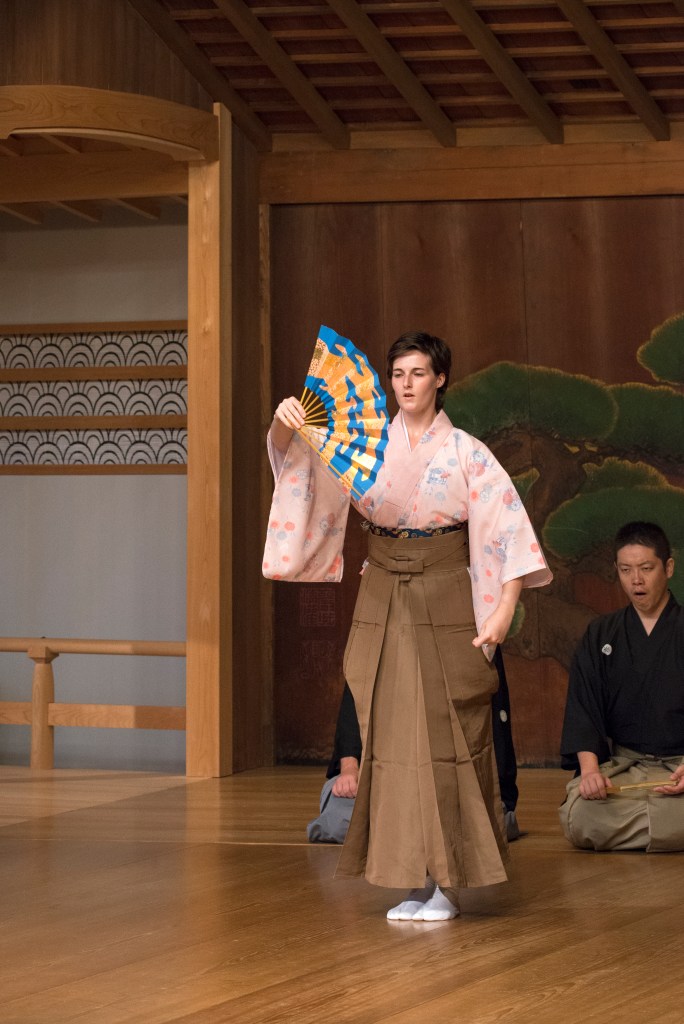
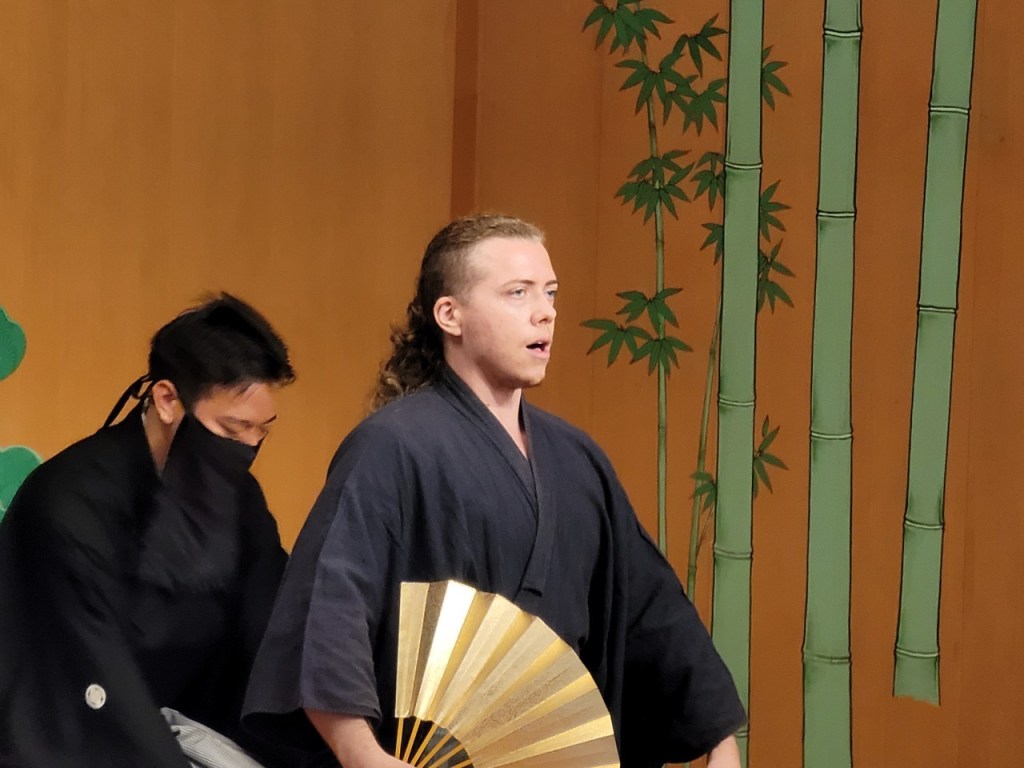
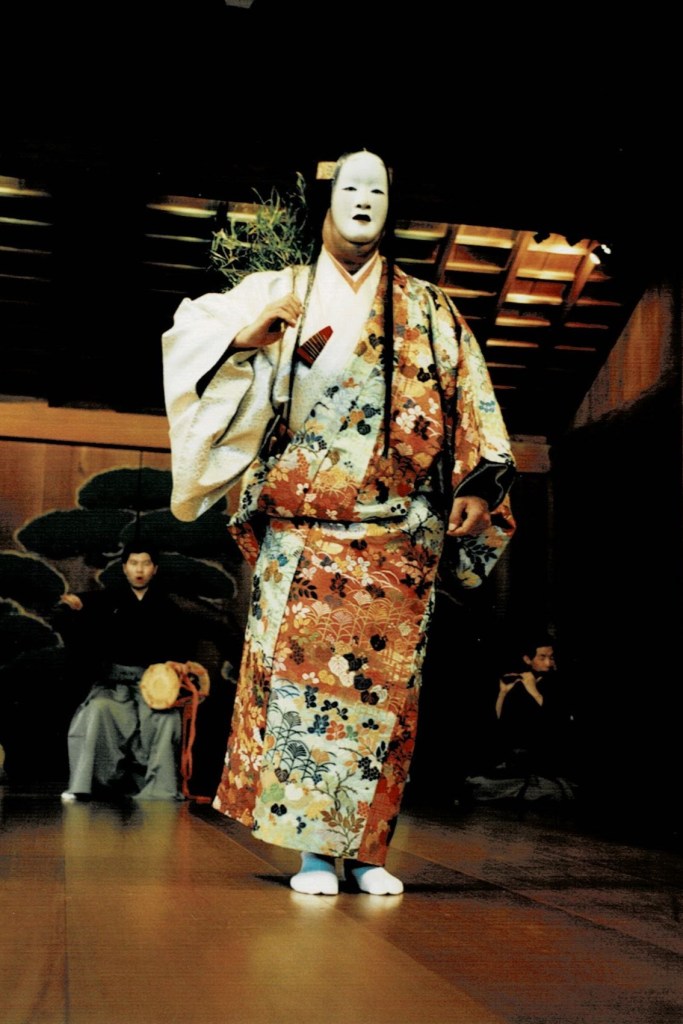
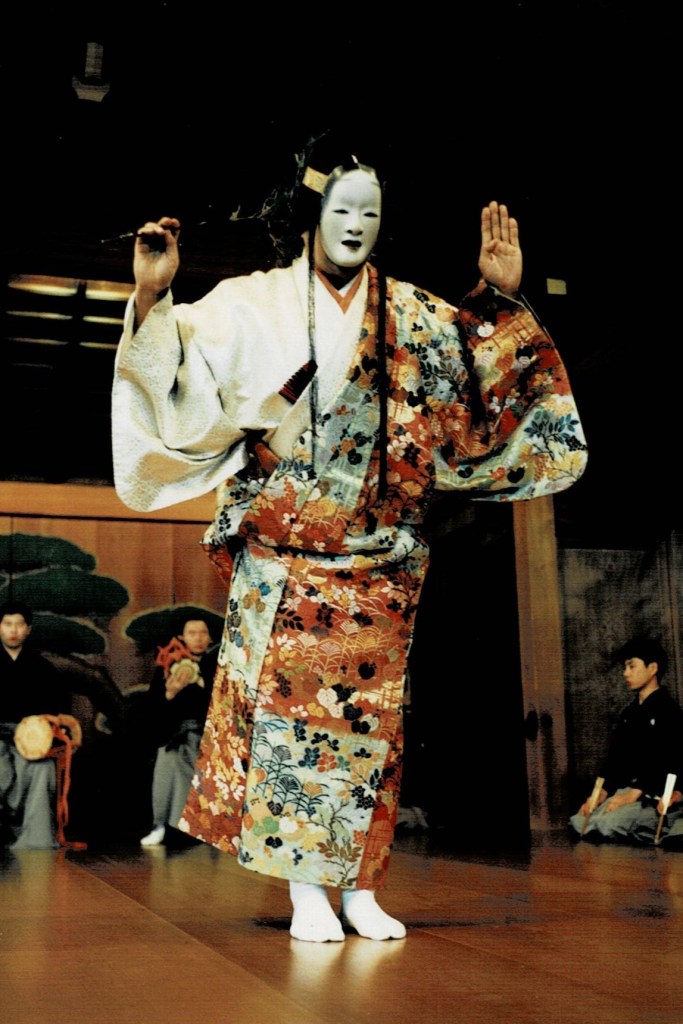
Arden TaylorArden Taylor (shimai: Iwafune kiri)Florian Ehrard (shimai: Ataka)












 The International Noh Institute