Here is the second of a series of posts on photographers who have worked with the INI and with Udaka Michishige. (See the first post of the series, featuring Irwin Wong). This time we have asked Stéphane Barbery to contribute to our blog with his thoughts on photographing Noh. Stéphane is a French writer and photographer living in Kyoto, where he studies traditional arts since 2008. He is currently working on a ten-year book project on Japanese beauty. Stéphane is a regular Noh theatregoer, and has taken pictures of a great number of Noh performances, as well as other performing arts. His personal take on Noh is apparent in the stunning pictures that capture the intensity of performance moments. We have met Stéphane on a number of occasions in Kyoto, and have always been impressed by his passion for Noh and determination to disseminate it internationally. Find out about Stéphane’s many activities on his blog and his Flickr page.
I consider Noh as an atheist religious experience. It is not “just an(other) exotic entertainment”. Noh is the most noble and intense form of collective trance that I know. It purifies the heart and restores faith in the kindhearted nature of human beings. The photographer must thus take all the necessary steps to preserve the masters and the sense of trance in the audience. This means :
1) Being invisible.
a) Avoid strobes or added lightings.
b) Staying usually in the back of the room which implies using a long zoom. I’ve discovered that the equivalent of a full frame 600mm is necessary in order to take pictures that are framed enough so that the non-acting people on stage (specially the musicians and the koken stage assistants) do not show on the background of a picture creating a visual noise that dilutes the emotion of a movement that usually relies on a detail in a fraction of a second. I also want to avoid “static” pictures that, from my point of view, lose all the specific dynamic energy of Noh. It means that I take a lot of pictures and carefully select the most intense ones during the processing phase.
2) Being absolutely silent. Technology (specially after Panasonic Gx7) allows to take pictures in total “silent mode” with no shutter or lens motor sounds.
B) Photographers should never aim for verisimilitude but should try to share the peak of the emotions they felt. During the development of pictures (nowadays, with digital photography, on a computer using Adobe Lightroom), they should feel totally free to modify every parameter of the shot (colour, contrast, lighting, frame, etc.) in order to convey the intensity of what they saw. If the colours of his file, considering the limits imposed by the effort to be ‘invisible’, can be mixed in a noise that does not honor the genius of the colours and patterns displayed on a Noh stage, then it is best to shift to monochrome in order to underline the detail they want to share.
C) The exceptional nature of Noh is not only seen during the short time of the stage but also in the lifetime preparation process of the Noh performers. My dream is to be able to take pictures of all the dimensions of this “behind the scenes” world so that those who cannot get the chance to access it can understand the number of skills required to be a Noh master, but also how intensively those professionals are dedicated to their art. As such they are true sources of inspiration who deserve to be much more honoured than they are nowadays.
Stéphane Barbery

Noh: Ataka. Shite: Udaka MIchishige. Photo: Stéphane Barbery
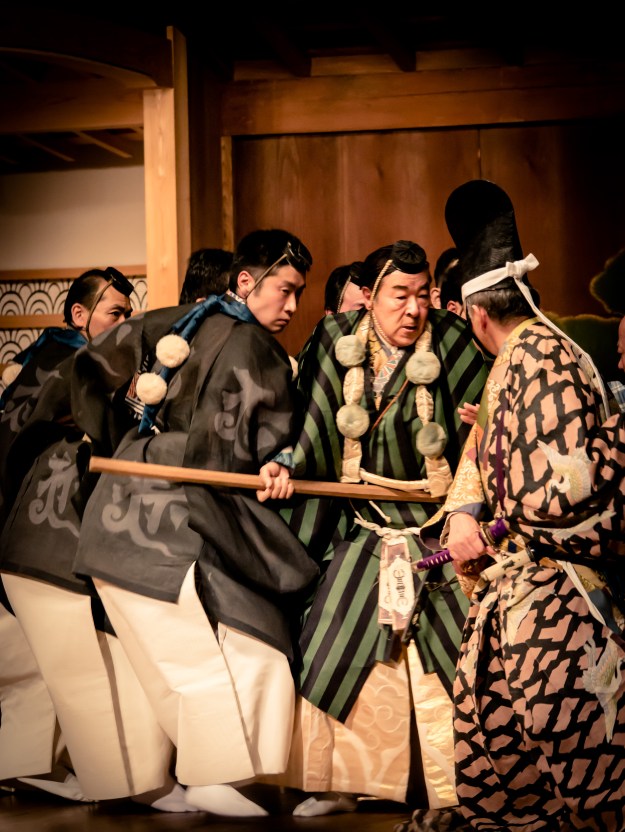
Noh: Ataka. Shite: Udaka Michishige. Photo: Stéphane Barbery
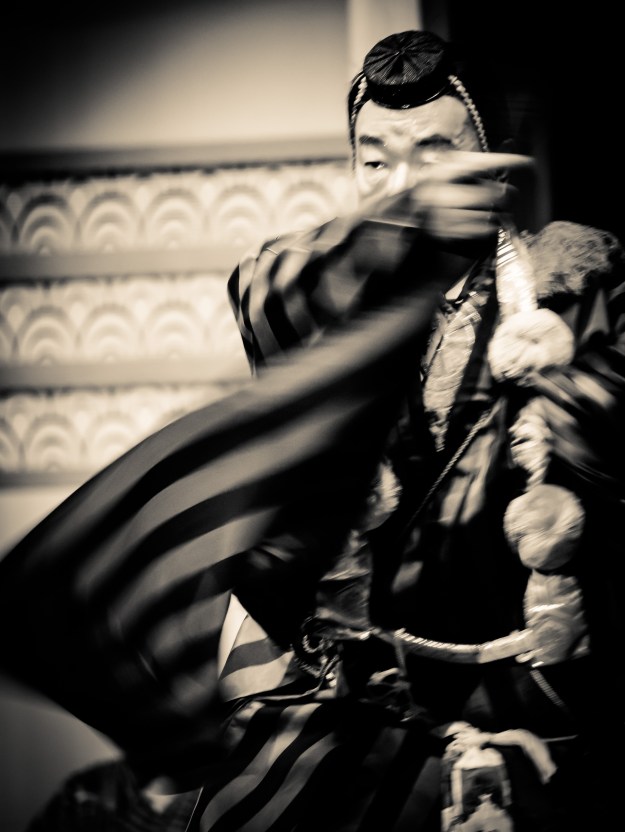
Noh: Ataka. Shite: Udaka MIchishige. Photo: Stéphane Barbery
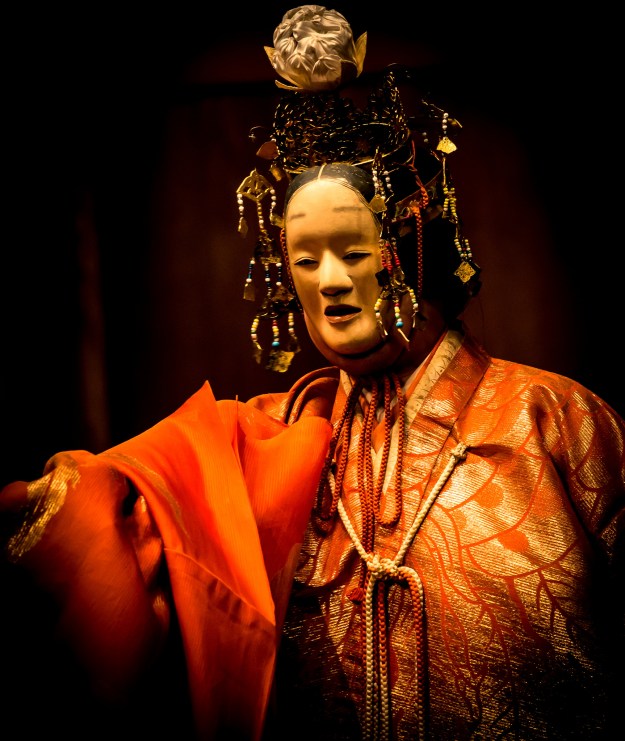
Noh: Hagoromo. Shite: Udaka Tatsushige. Photo: Stéphane Barbery
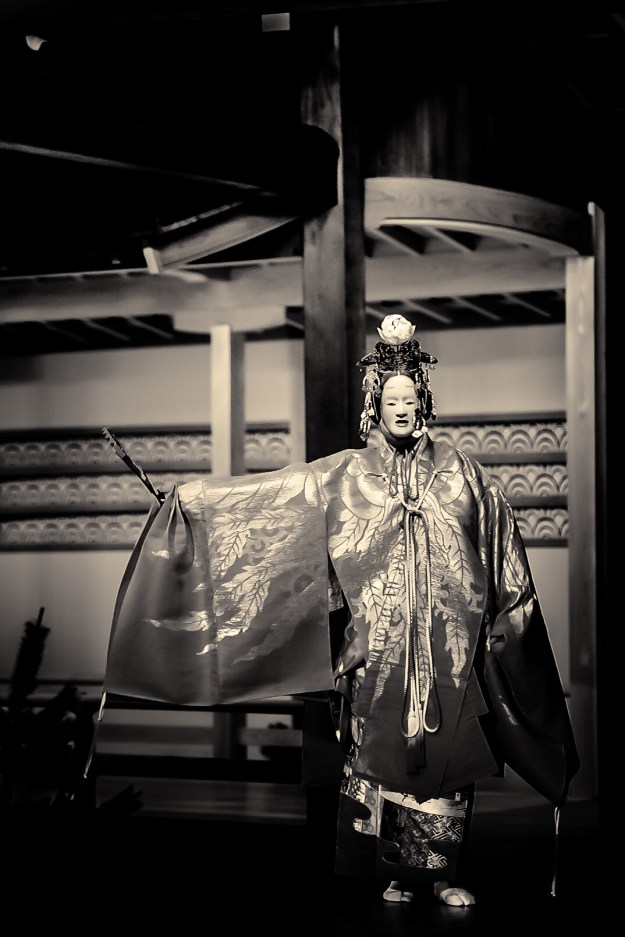
Noh: Hagoromo. Shite: Udaka Tatsushige. Photo: Stéphane Barbery
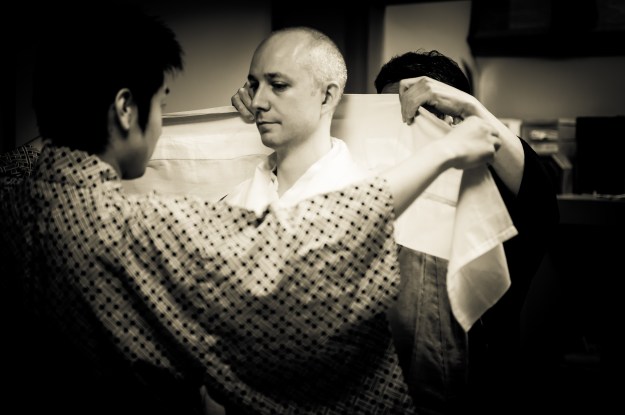
Diego Pellecchia getting dressed for the rehearsal of the Noh ‘Kiyotsune’. Photo: Stéphane Barbery
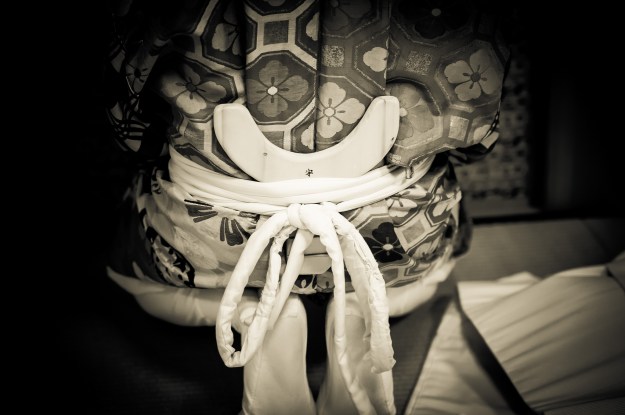
The Y-shaped kibane, a wooden piece that sustains the heavy okuchi-wide trousers. Photo: Stéphane Barbery

Adjusting the costume for the rehearsal of the Noh ‘Kiyotsune’. Photo: Stéphane Barbery
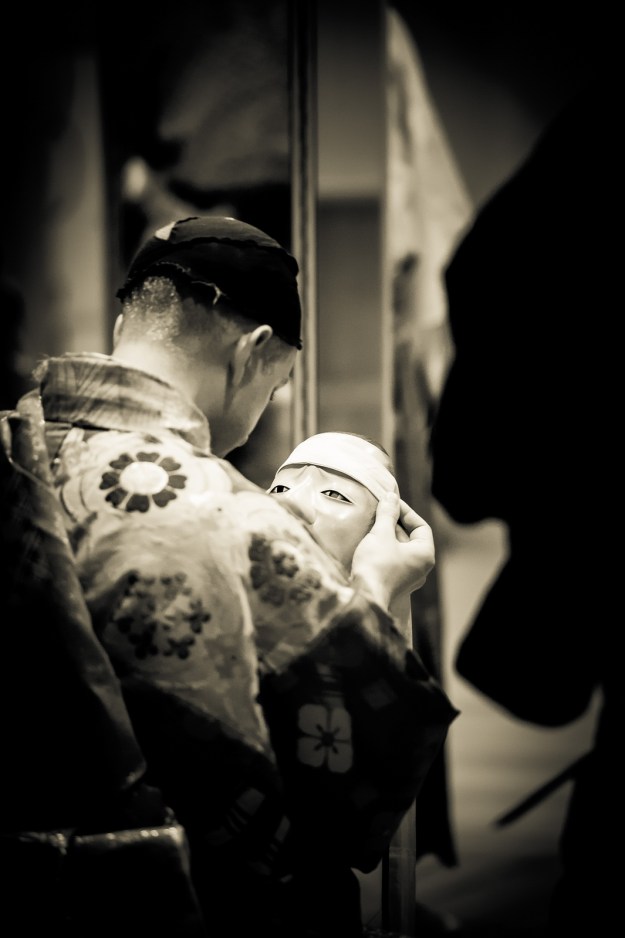
Diego Pellecchia bowing to the Chujo mask before the rehearsal of the Noh ‘Kiyotsune’ Photo: Stéphane Barbery
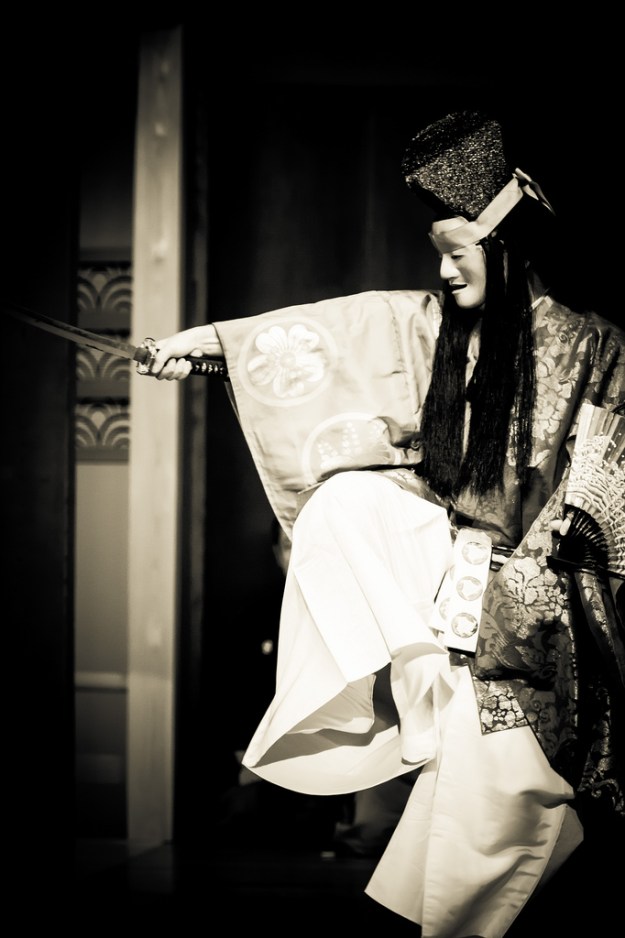
Noh: ‘Kiyotsune’. Shite: Diego Pellecchia. Photo: Stéphane Barbery

 The International Noh Institute