Tag Archives: performance

Nipponica 2025: Three Days of Nō in Bologna

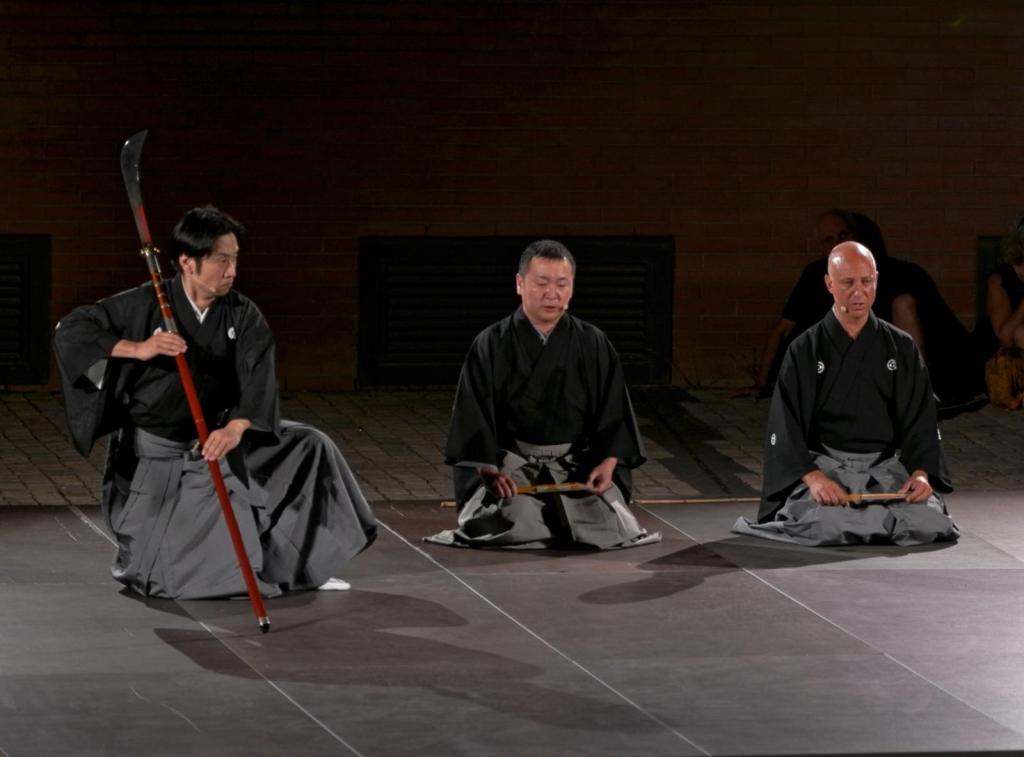
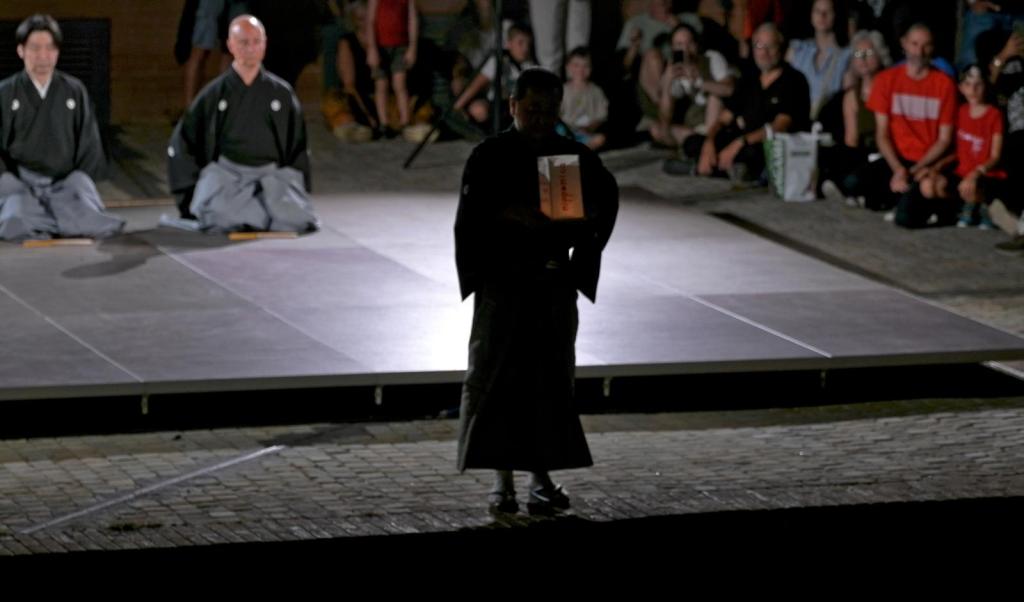
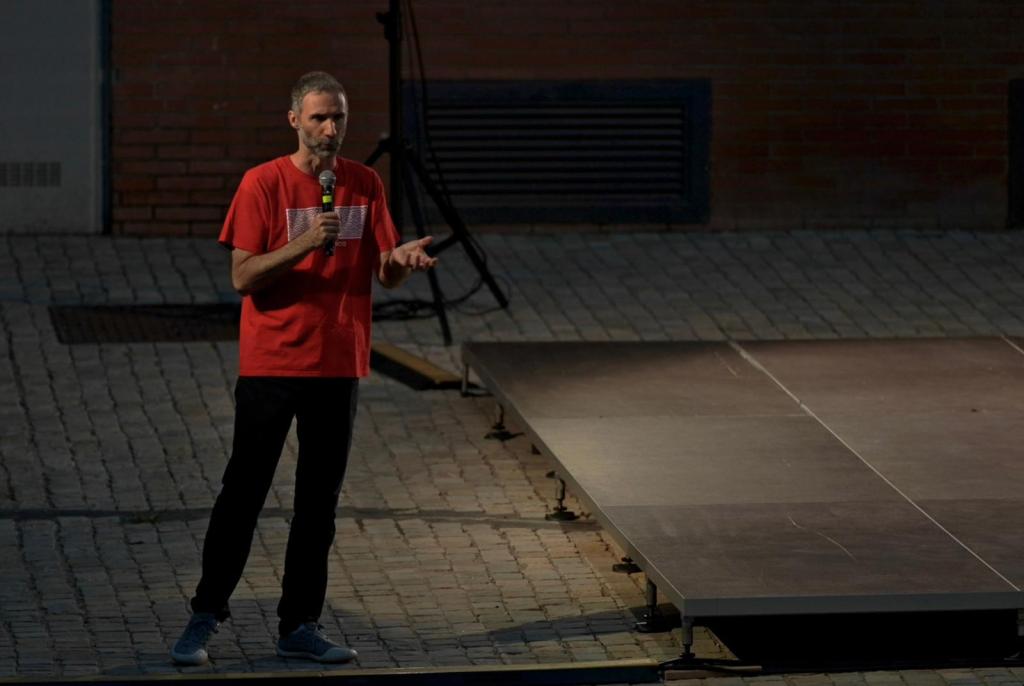
More than 3,500 people gathered in Bologna for this year’s Il Sole di Hiroshima, an event held on August 6 in remembrance of the victims of the atomic bombings of Hiroshima and Nagasaki, as well as all wars. The event was produced by Nipponica, and organized by Dr. Matteo Casari of the University of Bologna. This evening is celebrated every year and culminates with the moving tōrōnagashi ceremony, during which a sea of floating lanterns illuminates the canal crossing the Giardino del Cavaticcio, each serving as a personal tribute to peace.

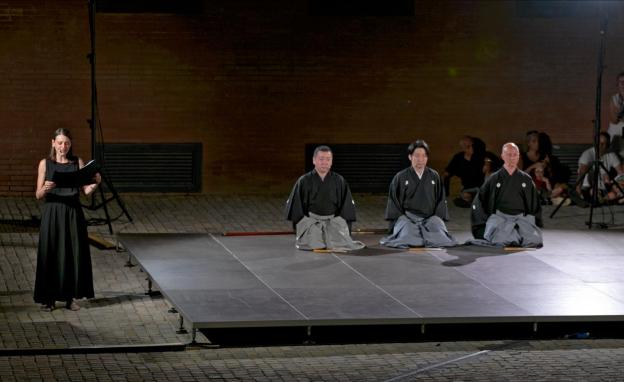
This year the event included four shimai dances from the classical nō repertory. Udaka Tatsushige, Udaka Norishige, and Diego Pellecchia performed selections from TenkoFujitoFuna Benkei, and Hagoromo. Each dance was introduced by a dramatic reading of its text by actor Donatella Allegro, adding a rich narrative layer to the performance.

One of the recurring themes in nō drama is remembrance. Many of the protagonists are ghosts or spirits of individuals marked by traumatic experiences, tormented by jealousy, remorse, or the anguish of oblivion. It is through the telling of their stories that they can finally find peace. Other dramas, however, stage the union between gods and human beings as an expression of the desire for peace and harmony. Although deeply rooted in the cultural context in which it was created and developed, the universal themes of nō and its stylized language allow diverse audiences to connect with the stories represented. Like all masterpieces of theatre, these dramas not only have the ability to fix specific events in memory, but they also act as parables that make us reflect on the cyclical nature of the human experience. Thus, nō seemed to fit perfectly the theme and purpose of the event.

The event was provided to the city at no cost. All donations collected were fully dedicated to supporting AGEOP Ricerca and its vital work with young oncology patients and their families.

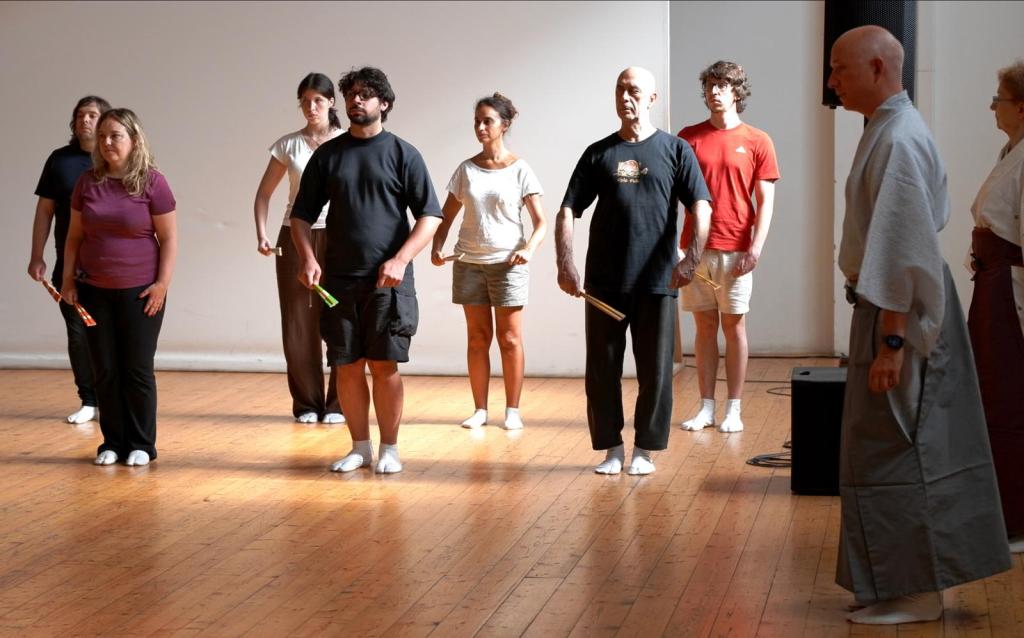
Following the event, a two-day workshop took place at the DAS Dispositivo Arti Sperimentali where participants learned the fundamentals of nō chant and dance. The workshop saw strong attendance from a diverse and engaged group of participants.

Our deepest thanks go to Nipponica for their impeccable organization and to Matteo Casari for his essential support. This important initiative was made possible through their dedication and passion.

Thoughts on the 2024 INI Kyoto Summer Intensive #5 (Oana Maria Ghiorghilas)

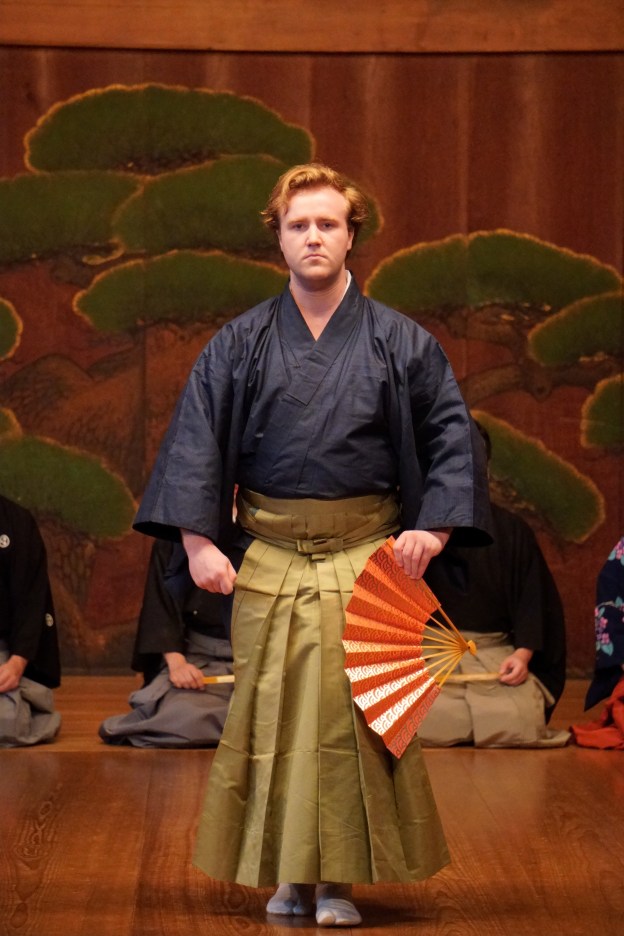
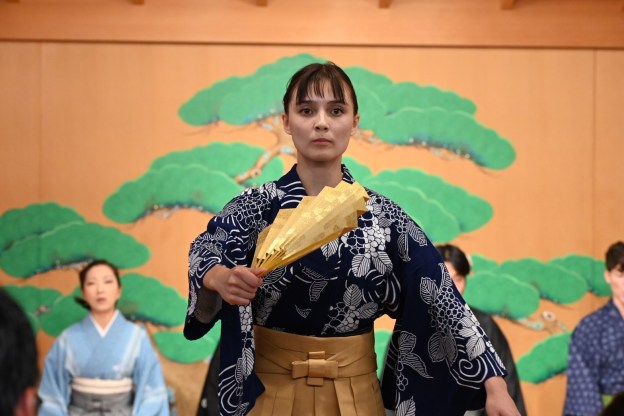
During my two-week training with INI, I had the opportunity to experience and embody nō forms and expressions while learning about the philosophy behind them. We formed a warm and supportive group, practicing together with the teachers every day. The final recital was incredible, and performing on stage alongside professional actors was an unforgettable experience.

(Oana Maria Ghiorghilas)

Thoughts on the 2024 INI Kyoto Summer Intensive #4 (Christopher Ellars)

I attended the INI program in order to provide supplemental research/training for the completion of my thesis project.  Though I had been researching Noh for quite some time prior to this, I did not see it playing a major role in my life moving forward.  Even as I entered Japan this time round, I viewed the upcoming training as a nice excursion from my other interests.  However, through INI, I was able to enter into a world completely unlike the one I was prepared for.

I found myself rubbing shoulders with practitioners of all different backgrounds, including academics, theater artists, professionals and more.  These were entirely different people who shared a passionate devotion to the practice of Noh.  I was deeply moved by the depth of this commitment which was woven into the fabric of each person’s very being.  And I realized that this deep connection to Noh, and to a greater extent Japanese culture, was one that I, too, shared.

My entire life I have loved Japan.  I have dreamt of coming here to experience the essence of Japanese culture.  This is a devotion that I had never been able to adequately share before.  INI provided to me a place of belonging I have been missing for as long as I can remember.

Each day, in lessons, in performance, and in the personal interactions fostered by the INI staff, I felt truly connected to a living community who cares for each other, who supports each other, and who pushes each other forward.  It is an experience I will cherish all my life.  I cannot recommend this program strongly enough to my fellow Japanophiles who search for community, because you will find it here at INI.

I am forever grateful to the Udaka family and Diego Pellecchia for the community they have fostered, and for the experience they provided to all of us students.

(Christopher Ellars)

Thoughts on the 2024 INI Kyoto Summer Intensive #3 (MC Crosby)

To start to know noh, you must know humility. As children, learning to walk is a milestone, and for noh, it is the same. When you are asked to forget what you understand about standing and begin to move as demons, divine beings, and wandering humans, you strip away the attachment to being right, and instead devote yourself to curiosity.

My greatest takeaway from INI’s Noh Intensive is that the simplest gesture or the thinnest wrinkle carved upon a mask can have the grandest meaning. Whether you are the suffering Yuya scanning the horizon for the solace of sakura, or Shojo bestowing the gift of everlasting sake to the generous shopkeeper, all these can be encapsulated in the gaze of the face or stream of the arm. Although there may have been fumbled footwork or warbled words, our eager inquiry into the imagery of the art form stripped us of our pride so we could breathe inside each character.

As the final demonstration ended, my reaction when ducking through the stage door was, “I wish I could perform again.” To me, that is the true sign of inspiration: longing to learn and share more. From the tips of my tabi socks to the final fold of the fan, I hope to humbly offer my knowledge of this art form to others through my work as an educator and writer. May this be the first step, the first kata, in a lifelong dance of coming to know Noh, and cheerily chanting that song to anyone willing to sing along.

(MC Crosby)

Thoughts on the 2024 INI Kyoto Summer Intensive #2 (Luca Domenico Artuso)

The INI Summer Intensive 2024 was an invaluable experience, offering a rare opportunity to engage deeply with the world of Noh. The program culminated in a full day of performances, where we presented the dances we had trained for during the two weeks.

A key highlight of the program was the diverse team of instructors. Lessons were led by Noh Masters Udaka Tatsushige and Udaka Norishige, Professor Diego Pellecchia, and Mask Carver Udaka Keiko. Each brought a unique perspective to teaching Noh, enhancing our understanding of the complexity behind its stylized tradition.

I felt that this year was particularly special, as Diego Pellecchia featured his performance of Funa Benkei, an unforgettable Noh play. This gave us a rare glimpse into backstage practices and allowed us to witness a very rare rehearsal process firsthand, unusual for the world of Noh professionals. We also attended two additional plays, which we discussed together, enriching our appreciation with Diego’s expert insights.

Beyond the structured lessons, the program fostered casual conversations, creating a relaxed atmosphere where participants could ask questions freely. These spontaneous exchanges often led to profound discussions, enriching our learning experience even further.

Finally, I must mention the unique training environment of the INI program, the Udaka family’s training space. For me, it is an incredibly special place. INI offers the chance to train in the same space where Noh is taught and practised daily. Every time I entered, I felt a sense of humility and excitement, surrounded by the tools, books, and materials that speak to the living tradition of Noh and its daily life practices.

I am deeply grateful to the Udaka family and Diego Pellecchia for their intellectual generosity. I highly recommend the INI Summer Intensive Program to anyone interested in exploring the world of Japanese Noh theatre.

(Luca Domenico Artuso)

Thoughts on the 2024 INI Kyoto Summer Intensive #1 (Scarlett Siqueira do Valle)

I am a PhD student under the supervision of Prof. Dr. Christine Greiner. My research focuses on nō as an important theatrical pedagogical tool for the training of both Japanese and foreign actors, maintaining the structure and content of traditional training while fostering theatrical pedagogical exchange. The aim is to create a “nō without borders” that continues to resonate today, both in Japan and in the West. For these foreign actors to engage with nō, they received support from masters with an intercultural vision, such as Udaka Michishige Sensei and Rebecca Teele Ogamo Sensei, among others at INI. Throughout my studies, I found it crucial to complement the bibliography I was reading with practical experience and hands-on training at INI.

During the two-week practical studies for my theoretical research, I particularly appreciated the interaction with the masters, who demonstrated attentiveness and specific pedagogical skills crucial to nō training. The INI provided a welcoming and supportive atmosphere, where I felt part of a family, with everyone contributing to each other’s progress. Experiencing the support, encouragement, and joy from the masters as they guide you is one of the most valuable memories to cherish for a lifetime.

I am deeply grateful to everyone who has supported me along this journey in life and scholarship. Special thanks to Christine Greiner Sensei, Rebecca Teele Ogamo Sensei, Udaka Tatsushige Sensei, Udaka Norishige Sensei, Udaka Keiko Sensei, Diego Pellecchia Sensei, and Monique Arnaud Sensei.

(Scarlett Siqueira do Valle)

Thoughts on the 2023 INI Kyoto Summer Intensive #1 (Nami Kitagawa Aam)

A few weeks have passed since the 2023 INI Kyoto Summer Intensive workshop and recital. Those of you who follow us on our social media have already seen a few photographs of the event. As always, we invite our participants to enrich our blog with their insightful impressions and thoughtful reflections drawn from their training experience. This is the first of a series – more will follow, so stay tuned!


“The INI Summer Intensive 2023 offers an intense and valuable experience. During the span of two weeks we where guided into the world of Noh, and I must say we learned a lot. As a performer it has been extremely valuable to be able to trust in something unknown, and embody Noh together with different teachers. By learning the basics, and somehow embodying it, we are offered another understanding of what the art of performing can be. I would recommend this experience to anyone with an interest in Noh, Japanese culture, or theatre culture in general.”

(Nami Kitagawa Aam)

Dōjōji memorial performance at the Kongō Nōgakudō (11 December 2022)

Dōjōji holds a special place in all traditional Japanese performing arts. The story of the dedication ceremony for a temple bell which leads to the revelation of its horrific history is one that is met by audiences with anticipation. The original bell, we learn, was destroyed many years before when it was used as a hiding place by a monk fearing for his life. The woman who had been led to believe that the monk would one day take her for his wife learns that this is not true. Her devastation at this betrayal of her love for the monk leads to her transformation into a serpent by her single-minded passion to find him as she follows him to the temple of Dōjōji where he has taken refuge. Finding his hiding place within the bell, she coils her serpent form around it, her passion burning him to a crisp. Priests preparing for the dedication ceremony are warned not to allow any women the temple precincts until after the ceremony is over, but they are no match for the spirit of the woman who come to avenge herself again on the bell, persuading them that as an entertainer is beyond gender. They even find an eboshi, the lacquered hat worn by shirabyoshi dancers, for her so she can perform in celebration of the raising of the bell. 

The nō version of Dōjōji emphasizes the unique relationship between the shite and the musicians, especially the hip and shoulder drums, to express intense primal emotions of resentment and of desire. Each of the two drums has a particular instance when they become one with the actor in his role of the woman seeking her revenge, but finally being driven away by the earnest prayers of the temple monks.

The first performance by a nō actor is considered to be especially important, a coming of age in his mastery of his skills in all aspects of his art, from chant and dance, to costuming as he accomplishes the change into serpent form within the bell and then battles the monks who seek to vanquish the spirit.

Memorial

On Sunday, December 11th, Udaka Norishige, will be performing Dōjōji at the Kongō Nōgakudō as the main feature of a memorial performance observing the sankaiki, or third anniversary of the death of his father, Udaka Michishige, who passed away on March 28, 2020. The traditional way of counting age in this case is based on the concept of cycles, with the first cycle considered to be accomplished at death, the first anniversary a year later, and the third at the end of the second year anticipating the start of the third year after death. Just as asymmetry is preferred over symmetry, odd numbers are considered preferable to even ones and to be more auspicious.

Mask exhibition

This is a performance dedicated to the memory of Udaka Michishige well-known as a performer, mask carver, teacher, and writer of and about nō and nō masks and also an affirmation of the resolve of his three children, mask carver Keiko, and actors Tatsushige and Norishige to continue on the path their father introduced them to and which they now are following each in their own way and also always supporting each other.

Photography exhibition

To this end they are also curating a display of performance photographs of their father, including photos of the three plays he authored and performed in: Shiki: Hototogisu, Genshigumo: Inori, a Prayer for Peace, and Ryōma as well as some of his nō masks. There will be a thirty-minute intermission between the performance by Udaka Tatsushige of the maibayashi of Tenko, the main dance section of a play in which the spirit of a young boy dances in joyful gratitude for religious services offered on his behalf after his death and Dōjōj allowing for more time to see the photos and masks.

This is a very special performance on many levels, and we look forward to seeing you there

December 11th 2022 from 14:00 (doors open at 13:00) at the Kongō Nōgakudō.

Tickets prices are:

 ¥6,000    general admission 

 ¥8,000    A seats  (facing the chorus or far right of stage front) 

 ¥11,000  S (Stage front, toward the back and right of stage front) 

¥13,000  SS (Stage front, closer to the stage) 

To reserve a ticket, contact us

Udaka Seiran Noh 2018 – Hanjo and Kuzu

The 2018 Udaka Seiran Noh performance will take place on Sunday 9th September at the Kongō Noh Theatre, in Kyoto. This year’s event features two plays: Hanjo (starring Udaka Norishige) and Kuzu, performed in the hakutō variant (starring Udaka Michishige).
Hanjo(班女)tells the story of Hanago, a female entertainer working at an inn in Nogami, who falls in love with Fukakusa no Shōshō, a gentleman from Kyoto. The two exchange fans before he departs. Heartbroken, Hanago cannot but think of her lover, and is expelled from the inn. She then reaches Kyoto, where she entertains people at Tadasu-no-mori, near Shimogamo Shrine. She is famous for her songs and dances about Hanjo, a Chinese courtesan who wrote verses about her lost love. In the meantime, Fukakusa-no-shōshō has been looking for Hanago. Having heard that she performs at Tadasu-no-mori, he visits there. The two recognize the fans they once exchanged and are happily reunited.
Kuzu(国栖)offers an entirely different kind of atmosphere. Fearing for his life after being attacked by a rival, Emperor Tenmu (interpreted by a child actor) has escaped to the Yoshino mountains along with his retainers. There he meets an elderly couple that offers him shelter and food. The old man first serves a local fish to the Emperor, who only eats half of it. He then releases the other half in the river, and the fish miraculously comes back to life. This is interpreted as a sign that the Emperor will be able to return to the Capital safely. Soon after this, soldiers sent by Tenmu’s rival reach the elderly couple’s house, but the old man manages to hide the Emperor under a boat. Later the Buddhist guardian god Zao Gongen and a Celestial Maiden appear and dance in celebration of the Emperor.

The 19th Udaka Seiran Noh no Kai 2018

Place: Kongō Noh Theatre, Kyoto.
Date: 9 September 2018 (Sun)
Time: Doors open at 12:30 the performance starts at 13:00 and is expected to finish at around 17:00.
Program:
  • Greetings and introduction: Udaka Tatsushige
  • Noh: Hanjo (Shite: Udaka Norishige)
  • Kyōgen: Niku jūhachi
  • Noh: Kuzu – hakutō (Shite: Udaka Michishige)
Tickets:
Front seats・8,000円 Side seats・6,000円 Corner seats・5,000円 Students・3,000円
For tickets or other inquiries contact us.